
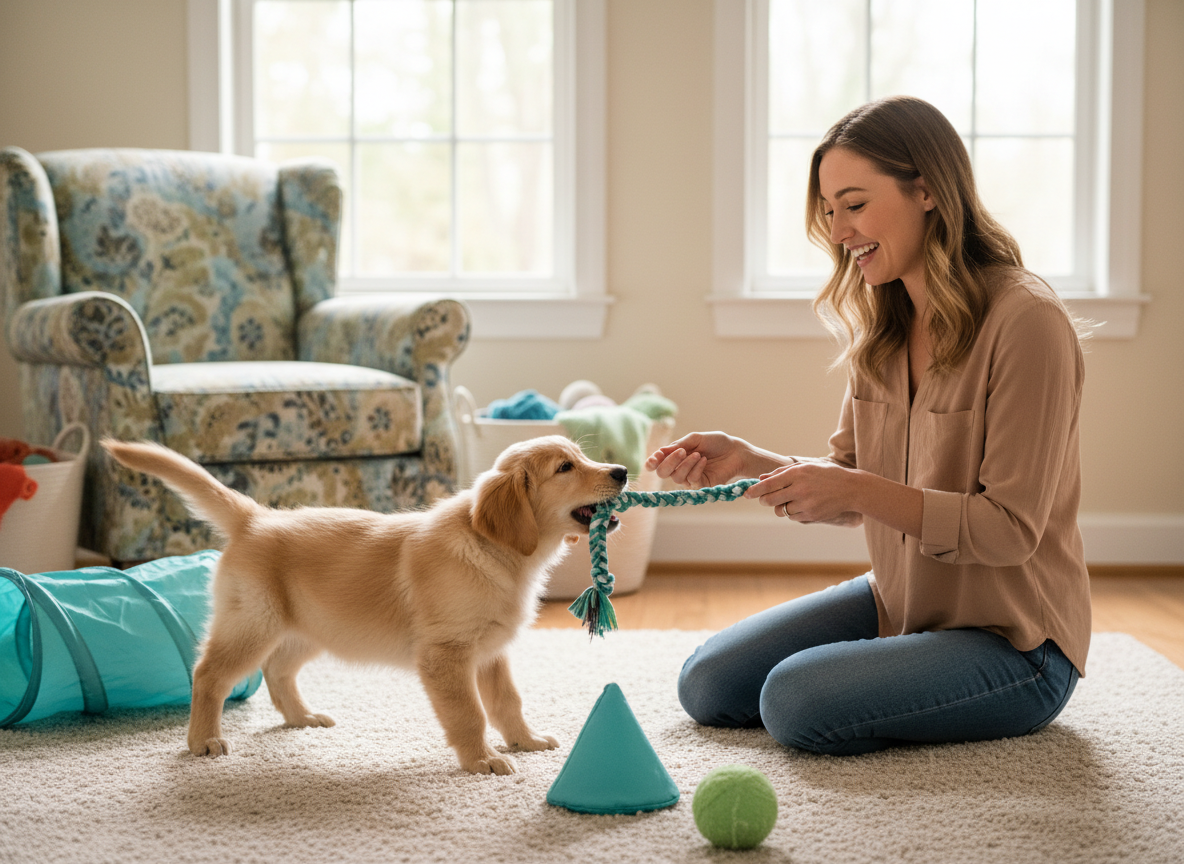
First: you are not failing because your puppy is mouthy, and you are not required to stand there and be used as a chew toy.
Mouthing and play biting are common in puppies. What matters is the context, your puppy's body language, and whether the household can interrupt the pattern safely. The aim tonight is not to make all puppy biting disappear. It is to make your response boring, predictable, and easier to repeat.
Owners repeatedly describe the same dead end: “redirecting does nothing,” “the yelp makes it worse,” and “my puppy only does this to me.” This page starts at that dead end instead of repeating the first tip you already tried.
Do this during the next burst
The 3-minute stop, swap, and step-away reset
- 0:00-0:20
Stop the moving target
Freeze your hands and feet. Tuck your hands close to your body. Skip yelling, pushing, and a high-pitched yelp if sound makes your puppy more excited.
- 0:20-1:00
Place a long toy away from your body
Move the toy low and away from your legs so the toy becomes the moving target. If your puppy takes it, keep the next round quiet and brief.
- 1:00-1:30
Step behind a barrier
If teeth return to skin or clothes, step behind a door or baby gate for about 20 seconds. No lecture and no eye contact. This is a pause in access to you, not a scare tactic.
- 1:30-3:00
Return once, then end the session if needed
Come back calmly and offer the toy once more. If biting restarts, end play and check the next basic need: toilet break, water, a safe chew, or quiet rest.
Safety changes the answer
Is this loose puppy play, or a reason to pause online advice?
One isolated sign cannot diagnose behavior. Look at the whole pattern and choose the more cautious path when you are unsure.
Often consistent with play biting
- The body stays loose, bouncy, and wiggly.
- Biting happens during play, movement, or a predictable evening burst.
- Your puppy can take a toy, food, or a short break in an easier moment.
- The bite pressure and frequency vary with excitement and fatigue.
Contact a veterinarian or qualified professional
- The body becomes stiff, frozen, guarded, or intensely still.
- Biting appears around food, toys, restraint, grooming, or handling.
- The behavior changed suddenly or the puppy may be in pain.
- Children cannot be separated and supervised safely.
- You feel afraid, trapped, or unable to manage the next incident.
Wash the wound thoroughly with soap and water. Seek prompt medical care for a deep puncture, serious bleeding, signs of infection, uncertainty about vaccination, or any wound you are concerned about.
Troubleshooting
Why redirecting to a toy may not be working
The toy arrived after your puppy was already frantic
Redirection works best before teeth land. Once your puppy is racing, grabbing, and ignoring food, the useful move may be ending the interaction rather than finding a better toy.
Your hands and feet were still the most exciting thing
Fast hands, flapping clothes, and retreating feet can keep the chase going. A longer toy placed away from your body creates a clearer choice.
The yelp became part of the game
Some puppies pause when they hear a yelp. Others get more excited. If the sound increases biting, remove the sound and use a quiet pause instead.
The puppy needed a different kind of break
A puppy who needs the toilet, rest, or calm chewing may not be able to continue social play well. More energetic play can make the next bite arrive faster.
Every person gave a different answer
If one person wrestles, one shouts, and one walks away, the biting keeps producing interesting results. Choose one family rule: teeth on people make access to people pause.
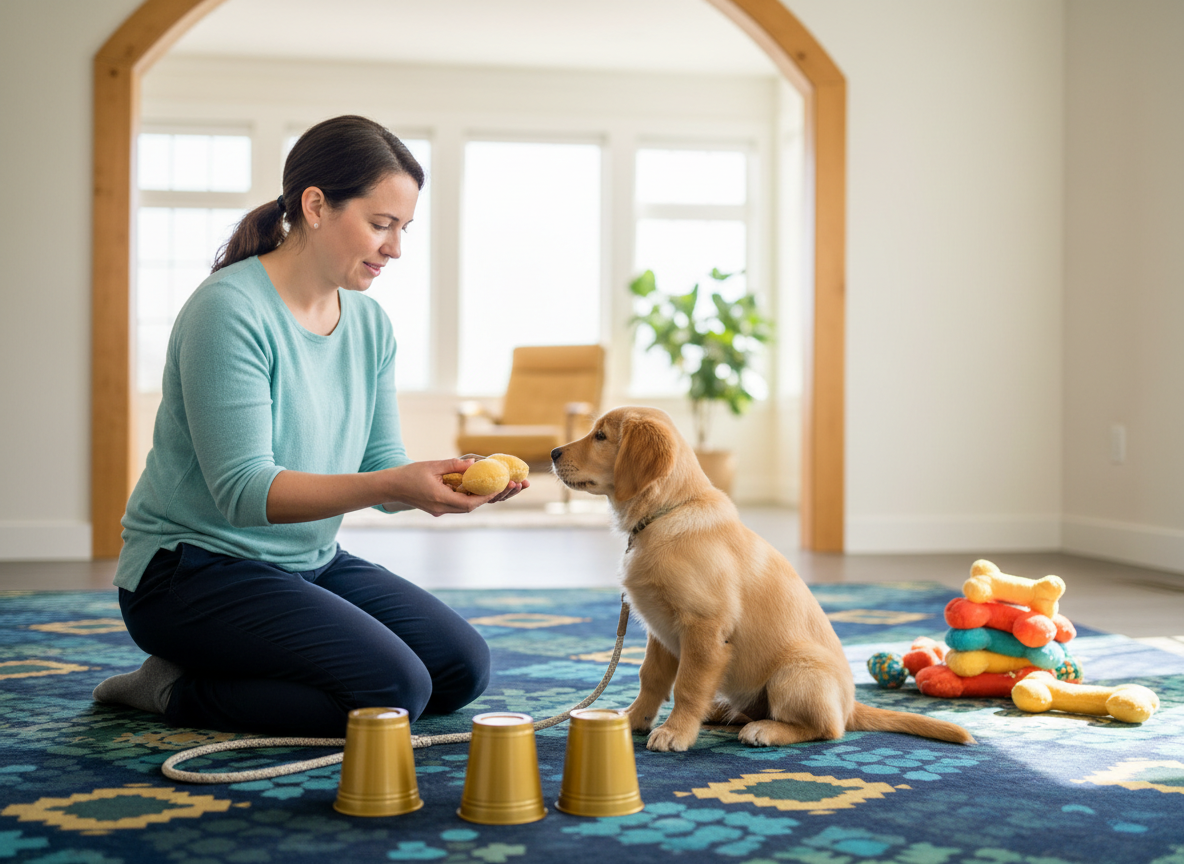
Prepare before teeth arrive
The useful moment is earlier than you think.
Put toys where the biting actually happens. Reaching into a closet after your puppy has grabbed a sleeve is not the same as having a long toy ready before floor play begins.
The relationship question
“Why does my puppy bite me but listen to my partner?”
This can feel personal, especially when you are doing most of the feeding, walking, cleaning, and supervision. But biting frequency is poor evidence of respect or dominance. More often, one person is available more, moves differently, plays on the floor, wears looser clothes, or responds in a way that keeps the interaction going.
Compare the setup instead: time of day, movement, sleep, toy position, and what each person does during the first two seconds. Then agree on the same quiet reset.
When children are involved
Children should not be responsible for teaching bite inhibition. Use gates, pens, and direct adult supervision so running, squealing, or pushing the puppy away cannot become the daily game. If safe separation is not realistic, arrange hands-on professional help.
Watch the concept
Bite pressure and biting frequency are not the same lesson.
Ian Stone of Simpawtico explains acquired bite inhibition in this video. Treat it as background, not a universal script. If vocal feedback or allowing mouthing makes your puppy more excited, use the quiet reset above and get individual help when the situation feels unsafe.
Make it repeatable
A seven-day puppy biting survival plan
Do not add a harder exercise every day. This week is about making the environment and the human response more predictable.
- Day 1 Place one long, soft toy in every room where biting usually starts.
- Day 2 Practice the quiet 20-second barrier reset once. Keep your voice and movement neutral.
- Day 3 End the hardest play period a little earlier and offer an appropriate calm chew.
- Day 4 Log the time, sleep, food, toilet break, and activity before the worst biting burst.
- Day 5 Give every adult the same one-sentence rule: teeth on people pause the interaction.
- Day 6 Use a gate, pen, or adult supervision so children are not part of biting practice.
- Day 7 Repeat the easiest setup. If the pattern feels unsafe or is not play-like, arrange qualified help.
Free resource
Take the 7-day puppy biting reset with you
A printable reminder for toy placement, quiet resets, pattern tracking, and the signs that change the plan.
- One family response for the next seven days.
- A short log for the hardest time of day.
- Medical and behavior stop signs on the same page.
Free to download. No email required.
Common questions
What owners ask after the first reset
Is it normal for a puppy to bite this much?
Mouthing and play biting are common parts of puppy development. Common does not mean painless or something you must tolerate without a plan. Watch the context and body language, then teach that teeth on people end play while appropriate toys keep it going.
Why does my puppy bite me but not my partner?
The usual differences are access, movement, timing, and consistency. The person doing more floor play, dressing, walking, or daily care often creates more opportunities. It is not good evidence that your puppy respects someone else more.
What if redirecting to a toy never works?
Move earlier, use a longer toy away from your body, and stop restarting the interaction when your puppy is escalating. If the puppy cannot disengage or the biting is stiff, guarded, or unsafe, use management and qualified help instead of repeating the reset.
Should I punish my puppy for biting?
This guide follows reward-based guidance. Avoid hitting, pinning, muzzle-grabbing, leash corrections, or other physical and psychological punishment. Teach the alternative and manage the setup instead.
When is puppy biting more than play?
Pause online advice and contact a veterinarian or qualified behavior professional when biting comes with stiffness, hard staring, guarding around food or handling, sudden behavior change, repeated unsafe contact, or a home setup that cannot keep people safe.
Sources and editorial notes
Where this guidance comes from
Dog Game Finder is an owner-education publisher, not a veterinary clinic or behavior practice. This article combines recurring owner questions with the reward-based and safety guidance below. It does not diagnose aggression, pain, or a medical condition.
Real questions improve this guide
What happens in the two seconds before your puppy bites?
Send the time of day, the body part or clothing targeted, and what you already tried. Reader questions may shape future updates, but email cannot provide emergency, medical, or individualized behavior care.
Email the editorial team