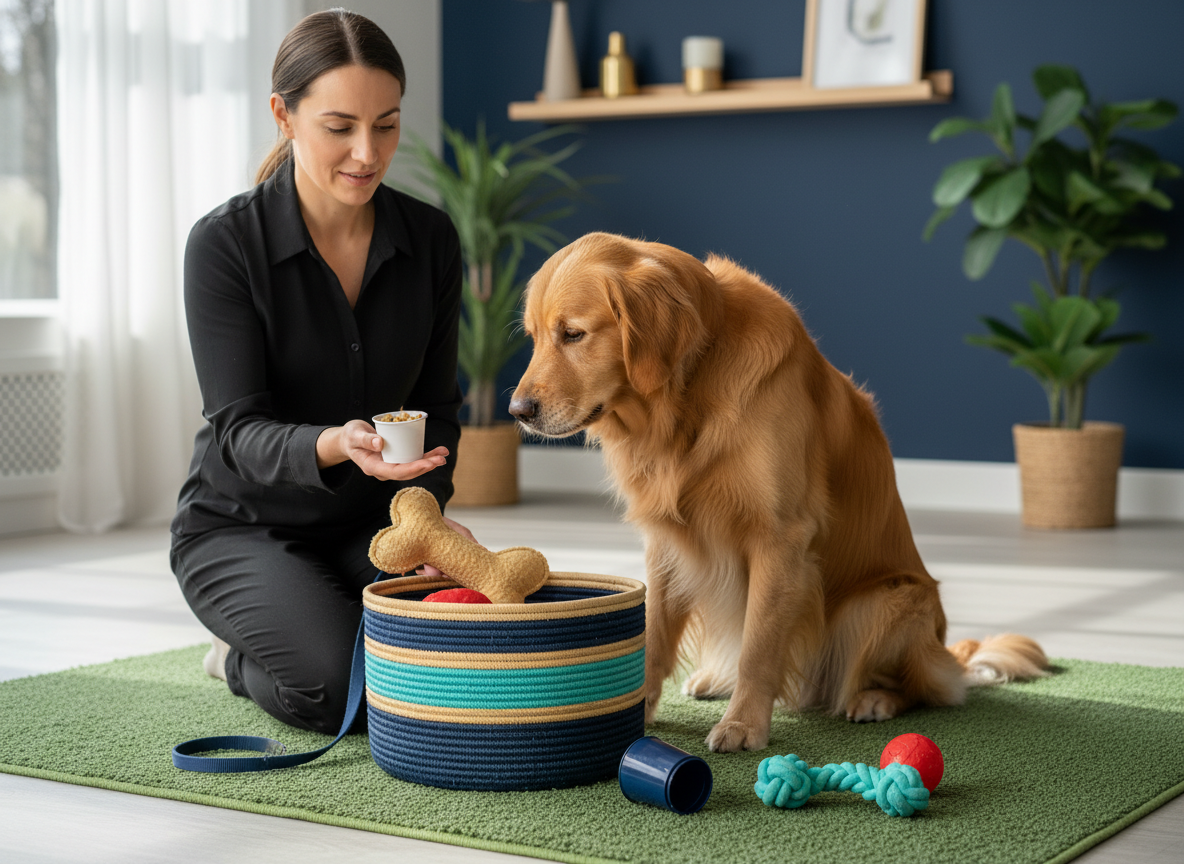
brain games for dogs

Brain Games for Dogs: 10 Dog Brain Games at Home

Try 10 dog brain games for mental stimulation, DIY enrichment, homemade puzzles, problem-solving practice, and puppy-safe thinking games.

DIY mental stimulation

Ten brain games for dogs before buying more puzzle toys.

Brain games should be easy to start, supervised, and adjusted before frustration appears. These options cover sniffing, homemade puzzles, problem solving, and calm thinking jobs.

Open game steps
Game Best for Time Use Safety line
Treasure Hunt boredom, rainy day, high energy 3-8 min treats or kibble There is food guarding, multiple dogs competing, or a dog who eats unsafe objects.
Snuffle Scatter rainy day, meal enrichment, calming sniffing 3-10 min kibble, snuffle mat or grass Your dog eats fabric, guards food, or shares the area with another dog.
Muffin Game meal enrichment, problem solving, boredom 3-6 min muffin tin, tennis balls, kibble Your dog chews and swallows balls, metal tins, or other puzzle pieces.
Shell Game attention, scent discrimination, quiet indoor play 3-5 min three cups, treats Your dog bites cups, guards food, or becomes frustrated by delayed access.
Get in the Box confidence, body awareness, independent thinking 3-5 min low box, treats, marker Your dog is worried by unstable surfaces or chews cardboard intensely.
Hot and Cold confidence, shaping, smart dogs 3-5 min treats, target object Your dog shuts down, avoids you, or shows stress during shaping.
Target Train basic focus, confidence, new skill building 2-4 min treats, hand target or lid Your dog is worried by hands near their face or has handling-related bite history.
Name Recognition toy names, cognitive work, advanced focus 4-8 min two or more toys, treats Your dog guards toys or becomes possessive during pick-up games.
Tidy Up advanced tricks, retrieval, household fun 5-10 min toy bin, soft toys, treats Your dog guards toys, swallows toy pieces, or becomes frustrated by retrieval.
Puppy Toy Trade puppy biting, clothing bites, toy interest 1-3 min two toys, treats Bites break skin, involve growling over handling, or feel unsafe.

First read

Start with a simple thinking job your dog can solve without chewing, guarding, or getting frustrated.

For owners looking for dog brain games, homemade puzzle ideas, mental stimulation at home, or a safer first step before buying enrichment toys.

Common triggers

  • rainy days
  • evening restlessness
  • meal time
  • work-from-home breaks
  • smart dogs who need problem solving
  • puppies who need calm mental exercise

Avoid making it harder

What not to do first

  • Do not make the puzzle harder every time.
  • Do not leave DIY food toys down after the food is gone.
  • Do not let multiple dogs crowd the same food game.
  • Do not use homemade puzzle pieces your dog can break apart and swallow.
Dog sniffing for hidden treats around safe living room objects.
Elementary School 3-8 min Level 1 high supervision

Treasure Hunt

Giving your dog a calm sniffing job that burns mental energy without frantic movement.

boredomrainy dayhigh energy low chew risk meal-based
  1. Start with visible treats close by.
  2. Say a start cue such as search.
  3. Hide pieces in slightly harder spots once your dog understands.

Track: How long your dog searches calmly before asking for help.

Do not use this if: There is food guarding, multiple dogs competing, or a dog who eats unsafe objects.

Step-by-step games

Try the easy version first.

These are full enough to use from the page, with links to the deeper game notes when you want more filtering or related games.

Filter all games

Easy DIY brain games with household items

Use simple supplies first so you can learn whether your dog enjoys sniffing, moving pieces, shaping, or toy discrimination.

Dog sniffing for hidden treats around safe living room objects.

3-8 min | Level 1

Treasure Hunt

Giving your dog a calm sniffing job that burns mental energy without frantic movement.

  1. Start with visible treats close by.
  2. Say a start cue such as search.
  3. Hide pieces in slightly harder spots once your dog understands.

Track: How long your dog searches calmly before asking for help.

Common mistake: Making the hides too hard before the dog knows the search cue.

Skip if: There is food guarding, multiple dogs competing, or a dog who eats unsafe objects.

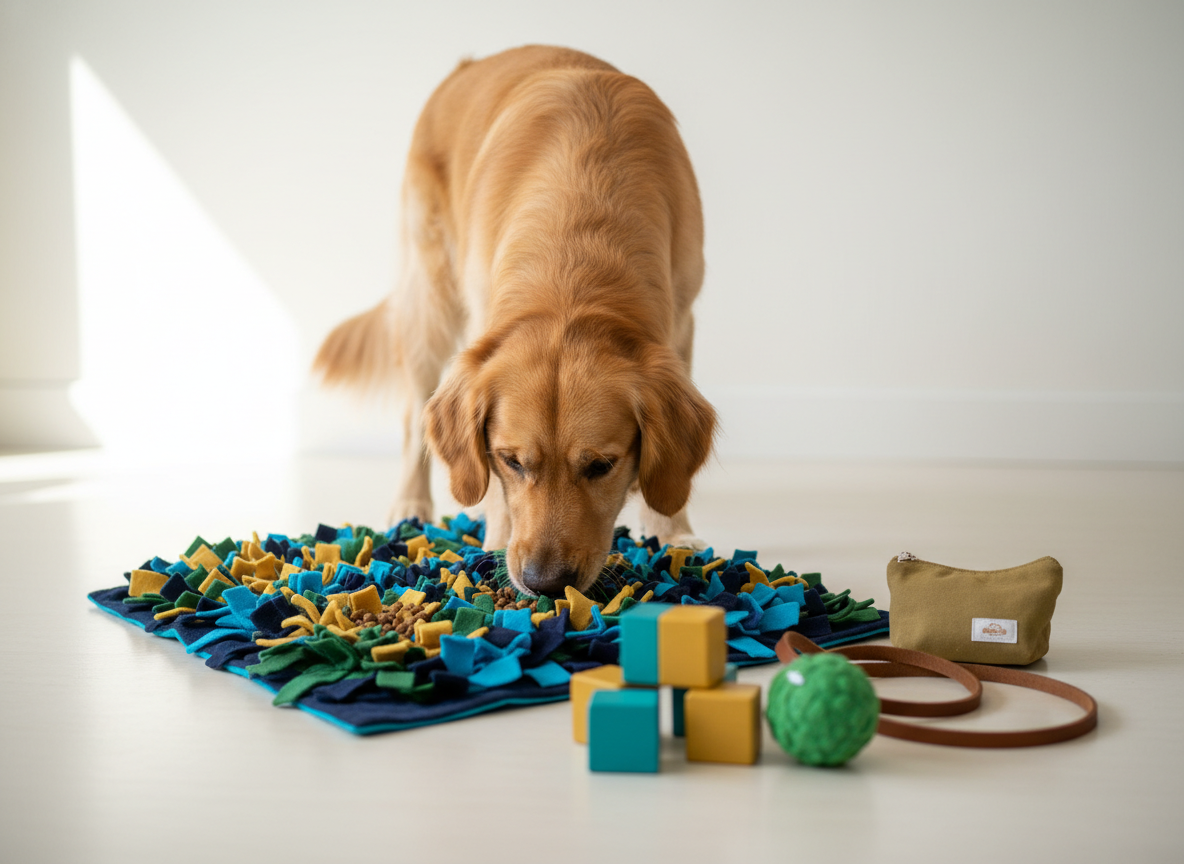
Dog calmly sniffing kibble from a snuffle mat.

3-10 min | Level 1

Snuffle Scatter

Replacing bowl feeding with a slower nose-work routine.

  1. Scatter a small meal portion in a safe mat or grass patch.
  2. Use a start cue such as search.
  3. Pick up the mat when the food is gone.

Track: Minutes of relaxed sniffing without frantic digging.

Common mistake: Leaving the mat down for a chewer to destroy.

Skip if: Your dog eats fabric, guards food, or shares the area with another dog.

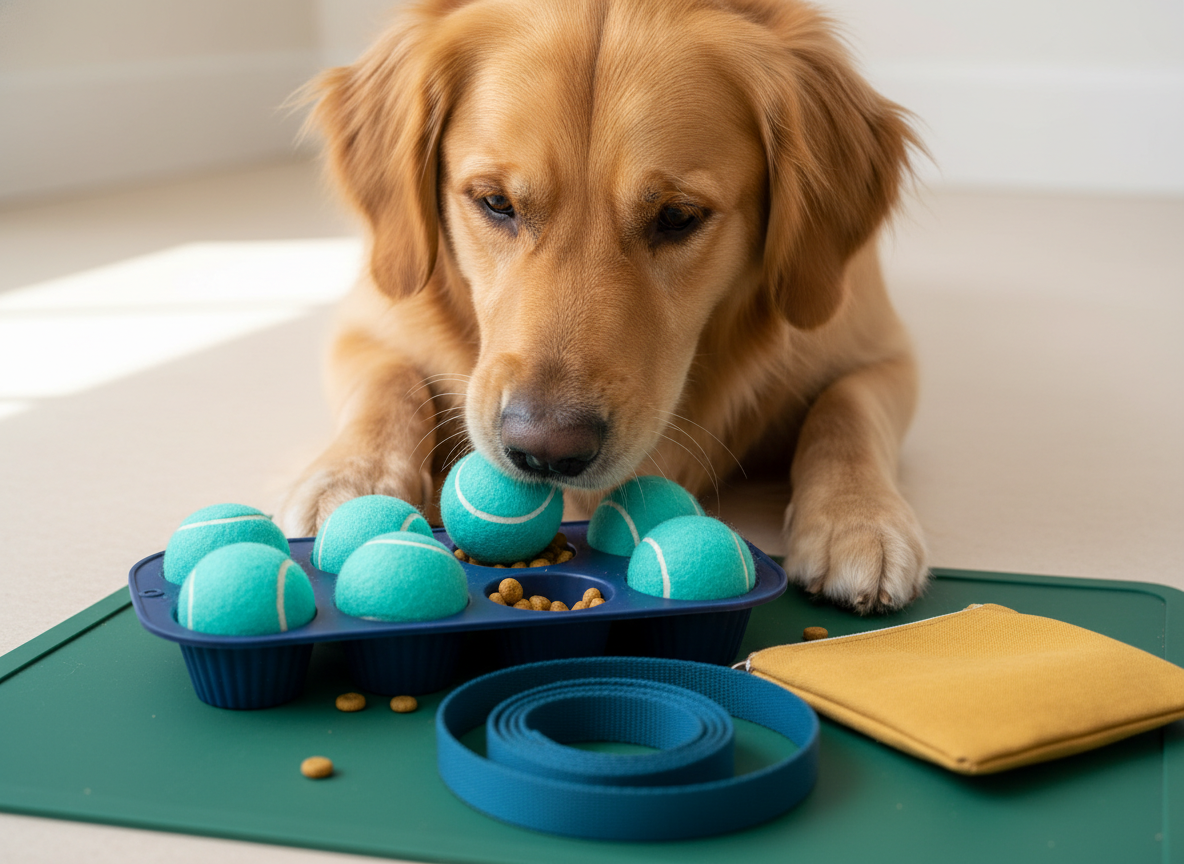
Dog solving a muffin tin puzzle with tennis balls and kibble.

3-6 min | Level 1

Muffin Game

Turning food into a small puzzle so your dog works slowly and thinks.

  1. Place kibble in a few muffin cups.
  2. Cover some cups with balls.
  3. Let your dog move the balls to find the food.

Track: How many cups your dog solves without frustration.

Common mistake: Leaving the tin down after food is gone, which invites chewing.

Skip if: Your dog chews and swallows balls, metal tins, or other puzzle pieces.

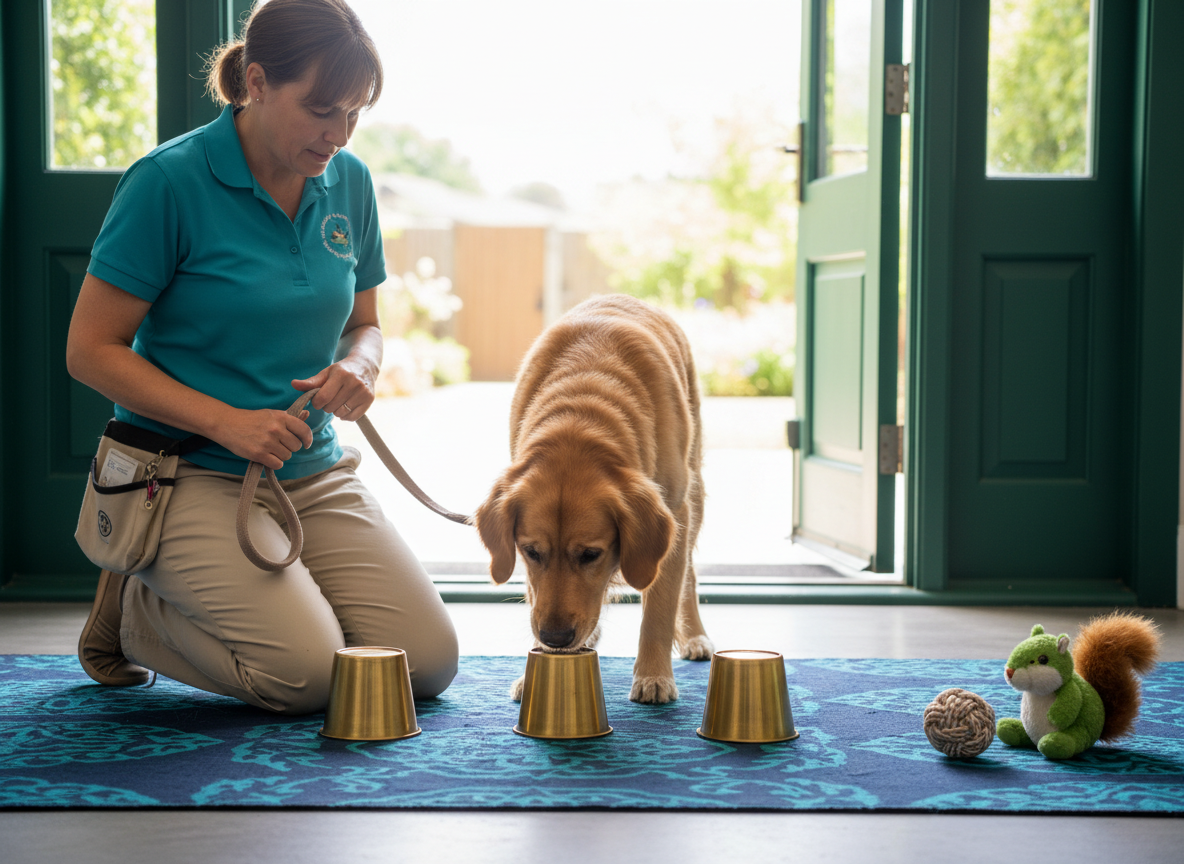
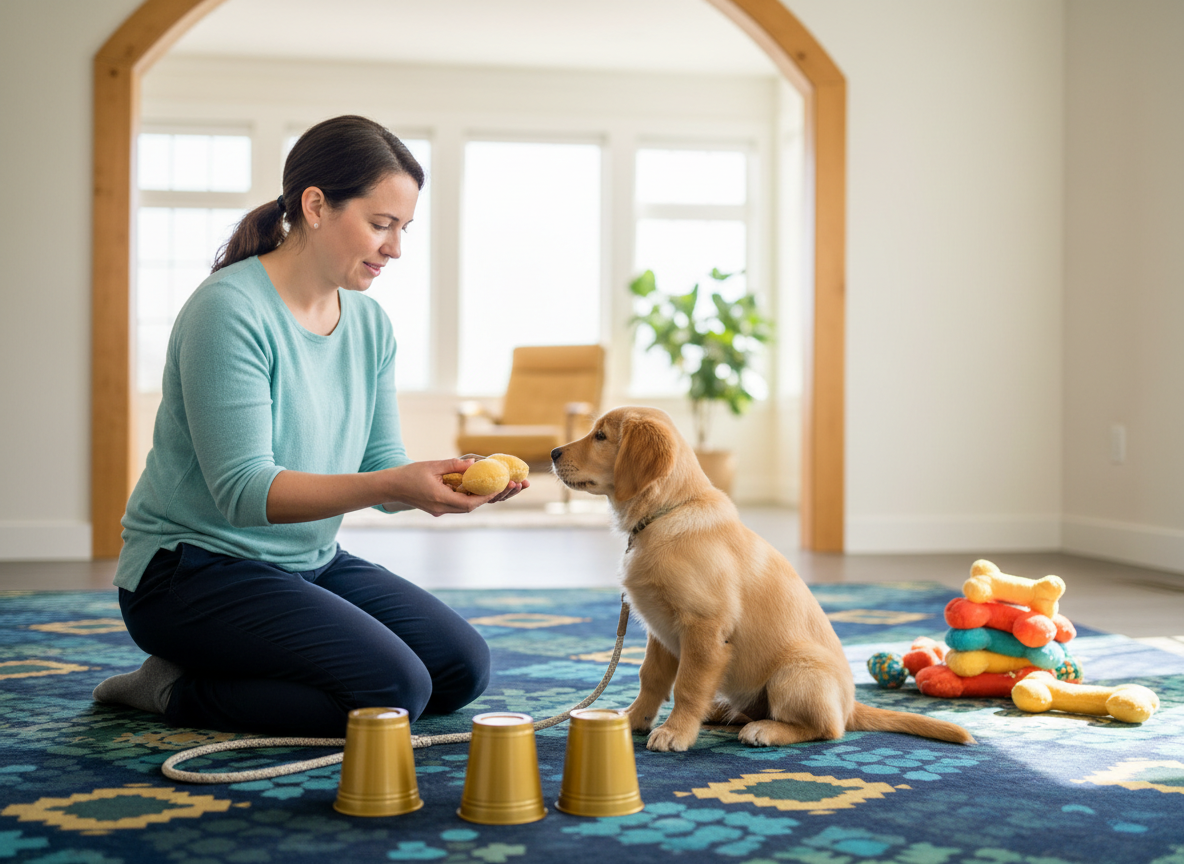
Dog choosing between three cups in a shell game.

3-5 min | Level 2

Shell Game

Encouraging your dog to use nose and focus rather than random pawing.

  1. Place a treat under one cup while your dog watches.
  2. Shuffle slowly.
  3. Reward the correct cup and reset.

Track: Correct choices at the easiest shuffle speed.

Common mistake: Shuffling too quickly and turning the game into guessing.

Skip if: Your dog bites cups, guards food, or becomes frustrated by delayed access.

Problem-solving games for dogs who like choices

These games reward offered behavior. Make the goal obvious at first, then increase difficulty only after your dog stays relaxed.

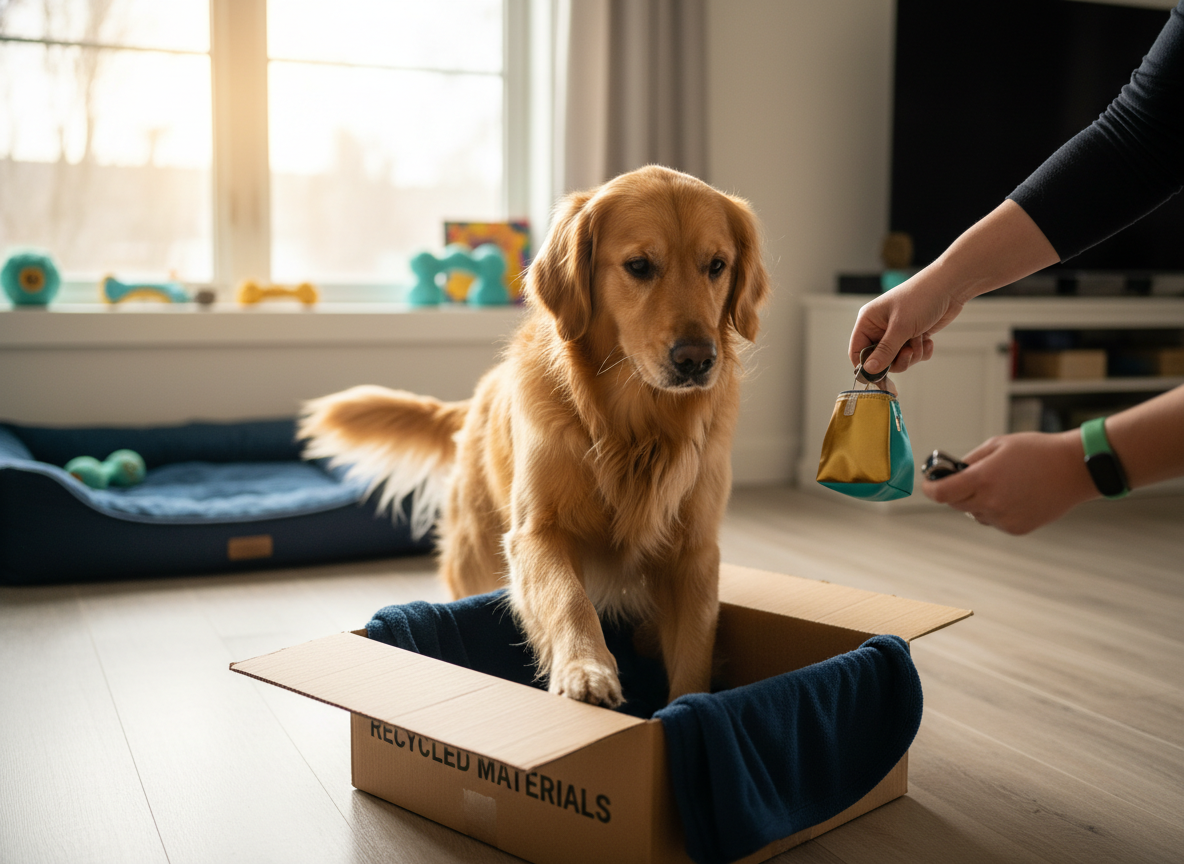
Dog stepping into a low cardboard box during shaping practice.

3-5 min | Level 2

Get in the Box

Teaching your dog to offer small choices and learn through shaping.

  1. Place a low open box on the floor.
  2. Reward looking at, sniffing, or stepping toward it.
  3. Build toward one paw, then four paws inside.

Track: Most advanced voluntary interaction with the box.

Common mistake: Putting the dog in the box instead of rewarding offered movement.

Skip if: Your dog is worried by unstable surfaces or chews cardboard intensely.

Dog solving a shaping puzzle with a target object on the floor.

3-5 min | Level 3

Hot and Cold

Letting your dog learn through feedback and problem-solving instead of luring every move.

  1. Choose a simple goal, such as stepping on a mat.
  2. Mark closer choices as hotter.
  3. Reset gently when your dog gets stuck.

Track: Number of offered choices before your dog reaches the goal.

Common mistake: Choosing a goal that is too complex for the first session.

Skip if: Your dog shuts down, avoids you, or shows stress during shaping.

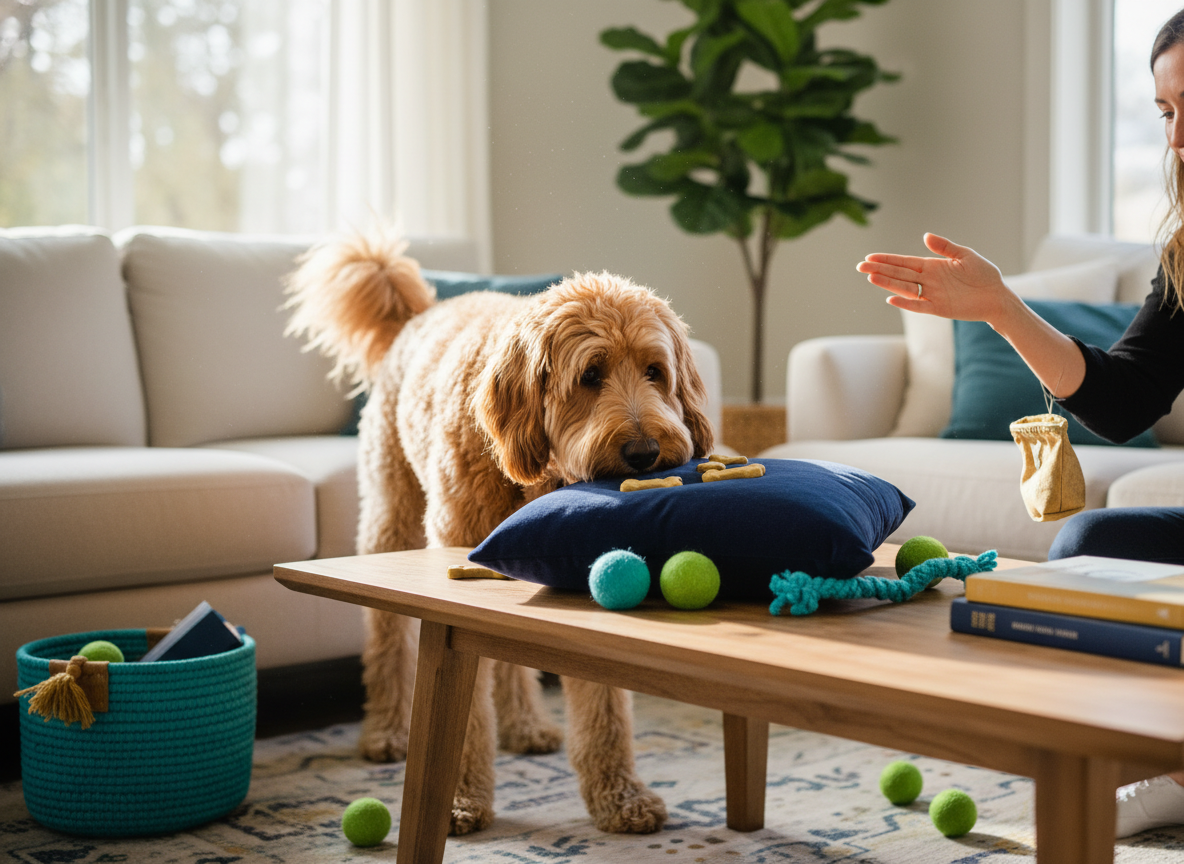
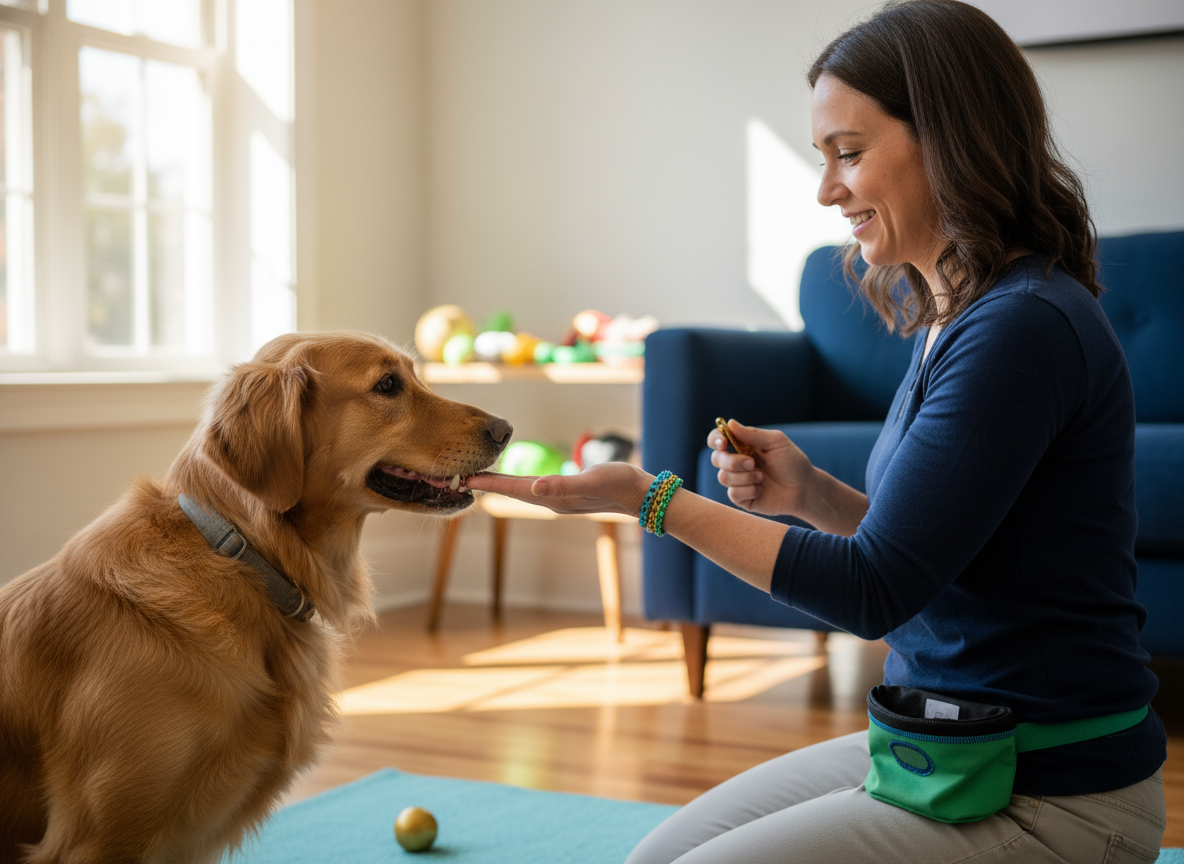
Dog touching a trainer's hand target in a bright living room.

2-4 min | Level 1

Target Train

Teaching your dog to touch a target so later skills feel like puzzles, not pressure.

  1. Present an open palm or small target.
  2. Mark any nose movement toward it.
  3. Reward close to the target, then reset.

Track: Number of voluntary nose touches in one short session.

Common mistake: Moving the target toward the dog instead of letting the dog choose to engage.

Skip if: Your dog is worried by hands near their face or has handling-related bite history.

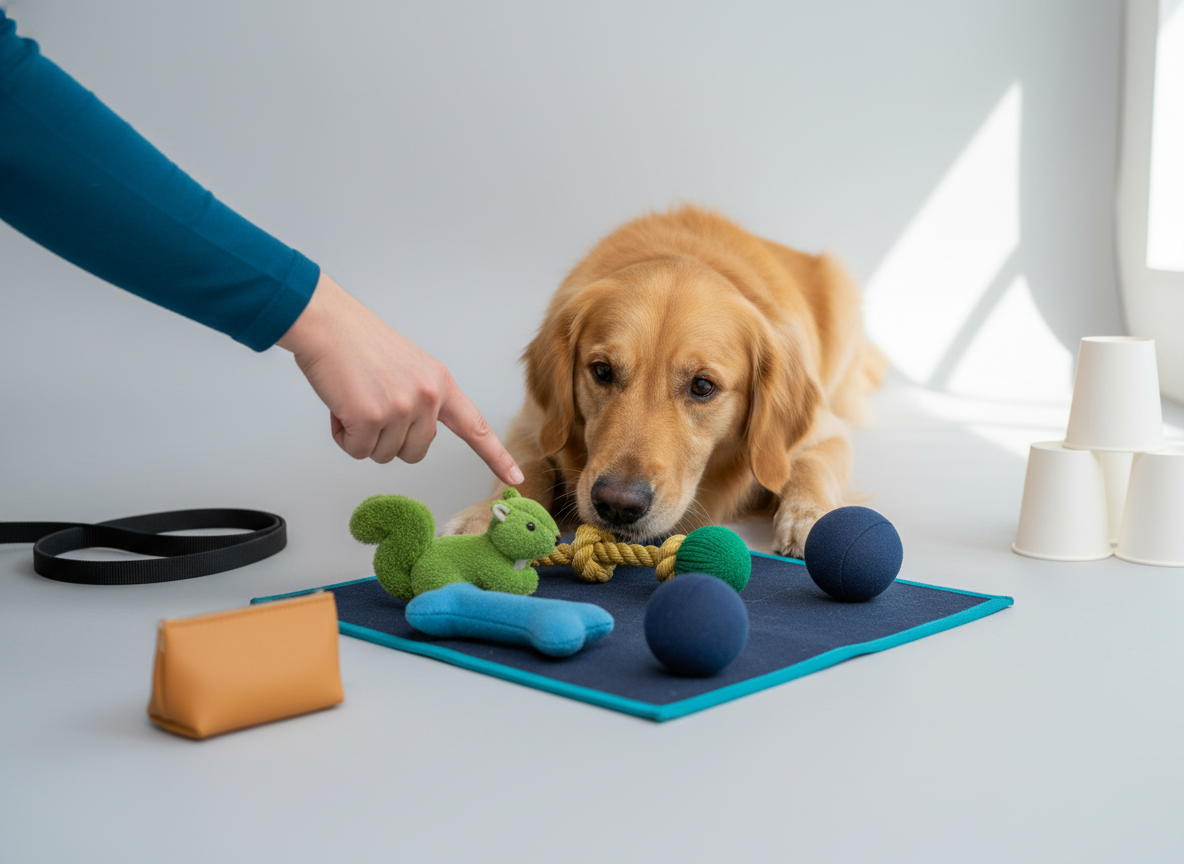
Dog choosing a named toy from a small group of toys.

4-8 min | Level 4

Name Recognition

Teaching your dog to discriminate between named objects.

  1. Start with one toy name.
  2. Reward touching or picking that toy.
  3. Add a second toy only after the first is reliable.

Track: Correct picks out of five easy repetitions.

Common mistake: Adding too many toy names before your dog understands one.

Skip if: Your dog guards toys or becomes possessive during pick-up games.

Dog dropping a toy into a toy basket during tidy up training.

5-10 min | Level 5

Tidy Up

Turning toy pickup into a useful problem-solving trick.

  1. Reward picking up one toy.
  2. Reward moving toward the bin.
  3. Build toward dropping the toy into the bin.

Track: Which step of the chain is reliable today.

Common mistake: Asking for the whole chain before the dog knows each part.

Skip if: Your dog guards toys, swallows toy pieces, or becomes frustrated by retrieval.

Puppy brain games

For puppies, mental stimulation should feel tiny and successful. Use visible food, soft toys, and one-minute rounds.

Dog sniffing for hidden treats around safe living room objects.

3-8 min | Level 1

Treasure Hunt

Giving your dog a calm sniffing job that burns mental energy without frantic movement.

  1. Start with visible treats close by.
  2. Say a start cue such as search.
  3. Hide pieces in slightly harder spots once your dog understands.

Track: How long your dog searches calmly before asking for help.

Common mistake: Making the hides too hard before the dog knows the search cue.

Skip if: There is food guarding, multiple dogs competing, or a dog who eats unsafe objects.

Dog calmly sniffing kibble from a snuffle mat.

3-10 min | Level 1

Snuffle Scatter

Replacing bowl feeding with a slower nose-work routine.

  1. Scatter a small meal portion in a safe mat or grass patch.
  2. Use a start cue such as search.
  3. Pick up the mat when the food is gone.

Track: Minutes of relaxed sniffing without frantic digging.

Common mistake: Leaving the mat down for a chewer to destroy.

Skip if: Your dog eats fabric, guards food, or shares the area with another dog.

Dog touching a trainer's hand target in a bright living room.

2-4 min | Level 1

Target Train

Teaching your dog to touch a target so later skills feel like puzzles, not pressure.

  1. Present an open palm or small target.
  2. Mark any nose movement toward it.
  3. Reward close to the target, then reset.

Track: Number of voluntary nose touches in one short session.

Common mistake: Moving the target toward the dog instead of letting the dog choose to engage.

Skip if: Your dog is worried by hands near their face or has handling-related bite history.

Puppy redirecting from hands to a soft toy during play.

1-3 min | Level 1

Puppy Toy Trade

Redirecting teeth to an allowed object before play gets frantic.

  1. Keep a soft toy within reach.
  2. Move the toy before teeth land on skin or clothes.
  3. Trade and pause play before your puppy gets overtired.

Track: Redirects completed before skin contact.

Common mistake: Waiting until the puppy is fully overaroused before offering the toy.

Skip if: Bites break skin, involve growling over handling, or feel unsafe.

7-day starter plan

Day 1

Start Treasure Hunt with visible treats.

Day 2

Use a small meal in Snuffle Scatter.

Day 3

Try the Muffin Game with safe pieces.

Day 4

Add the Shell Game at an easy shuffle speed.

Day 5

Use Box Shaping for problem solving without food puzzles.

Day 6

Repeat the calmest game instead of making it harder.

Day 7

Choose whether DIY games, safer gear, or a course path fits next.

Free resource

Get the 10 zero-cost indoor dog games guide

A printable starter list for calm sniffing, focus, and low-equipment enrichment.

  • Low-equipment games.
  • Food and chewing safety notes.
  • Links to full game steps.

Email delivery is ready to connect; this preview unlocks the resource and records anonymous signup intent.

Comparison matrix

Choose the next step by risk and effort.

Use the lowest-risk path that matches your dog before buying more gear or a course.

Factor Free indoor games Puzzle toys / tools Brain Training course In-person trainer
CostFreeLow to mediumPaid courseHighest
Time needed2-10 minutesSetup plus supervisionShort daily lessonsScheduled sessions
Best forBoredom, focus, low-risk practiceDogs who enjoy puzzle or leash toolsOwners who want a structured game pathBite risk, severe fear, complex cases
Not forDogs who need urgent hands-on helpDogs who swallow or guard objectsOwners who cannot practice consistentlyNot a quick content substitute
SupervisionOwner presentOwner present, especially food toysOwner-led practiceProfessional-led
Gear neededTreats, towels, household itemsPuzzle, mat, leash, treat pouchInternet access and treatsVaries by case
Next stepTry one game todayBuy only after the game style fitsReview the course after safety checkStart with vet or certified behavior help

Related next steps

Questions owners ask

Are brain games enough exercise?

Brain games are a mental outlet, not a replacement for safe physical activity. Many dogs do best with both.

What is the easiest brain game for dogs?

Treasure Hunt is usually the easiest: hide a few treats where your dog can find them, then slowly make the hides more interesting.

Do I need a puzzle toy?

No. Start with treats, a towel, a muffin tin, cardboard boxes, or a few safe hiding places. Buy gear only after you know which style your dog enjoys.

Can puppies play brain games?

Yes, but keep sessions very short and easy. Puppy brain games should feel like calm sniffing or simple choices, not a long problem-solving test.

What are good brain games for dogs at home?

Start with Treasure Hunt, Snuffle Scatter, the Muffin Game, Shell Game, Target Train, or Hot and Cold. These use normal household space and can be stopped quickly if your dog gets frustrated.

How do I make homemade brain games for dogs?

Use safe food hides, towels, muffin tins, boxes, cups, or named toys. Supervise the whole game and remove props after the food or toy task is finished.

What mental stimulation games work for smart dogs?

Smart dogs often enjoy offered-choice games such as Box Shaping, Hot and Cold, Name Recognition, Tidy Up, and Target Train. Keep the first version obvious so the game stays fun instead of becoming a test.

Next step

Compare the full brain-game course

If this low-risk game fits your dog, a full game-based course may make the next steps easier to follow.

Best for
  • Dogs who can safely practice short games.
  • Owners who want a structured daily path.
  • Low-risk foundation skills and enrichment.
Skip if
  • food guarding
  • dogs who swallow puzzle pieces
  • multiple dogs competing over treats

Why it fits here: This page starts with Treasure Hunt, then uses the course only as a structured next step after safety boundaries are clear.

Affiliate link: this site may earn a commission at no extra cost to you.

Skip this offer if there is bite history, severe fear, sudden behavior change, or you cannot safely control your dog.