brain games for puppies

Brain Games for Puppies: 6 Safe Puppy Thinking Games

Short puppy brain games for indoor mental stimulation, calm sniffing, early focus, toy trade practice, and beginner problem-solving without overwhelming your puppy.

Puppy mental stimulation

Six puppy brain games for short indoor sessions.

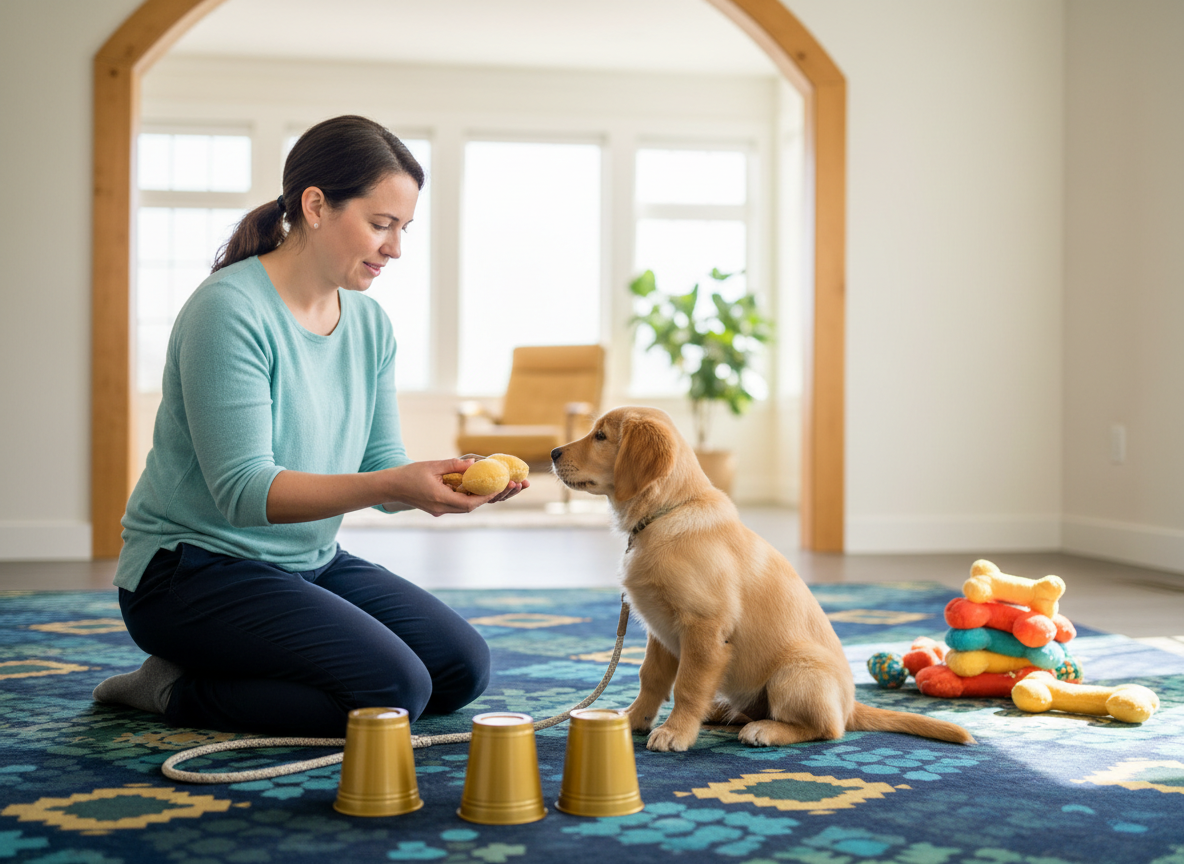
Puppy brain games should be tiny, obvious, and easy to stop. These picks use sniffing, focus, toy trades, and beginner problem solving without turning play into a long training test.

Open game steps
Game Best for Time Use Safety line
Treasure Hunt boredom, rainy day, high energy 3-8 min treats or kibble There is food guarding, multiple dogs competing, or a dog who eats unsafe objects.
Snuffle Scatter rainy day, meal enrichment, calming sniffing 3-10 min kibble, snuffle mat or grass Your dog eats fabric, guards food, or shares the area with another dog.
Target Train basic focus, confidence, new skill building 2-4 min treats, hand target or lid Your dog is worried by hands near their face or has handling-related bite history.
Eye Contact Game attention, bonding, basic obedience 1-3 min treats Direct eye contact makes your dog freeze, growl, or repeatedly look away.
Name Recognition toy names, cognitive work, advanced focus 4-8 min two or more toys, treats Your dog guards toys or becomes possessive during pick-up games.
Puppy Toy Trade puppy biting, clothing bites, toy interest 1-3 min two toys, treats Bites break skin, involve growling over handling, or feel unsafe.

First read

Give your puppy one tiny thinking job, then stop before overtired biting or frustration starts.

For puppy owners searching for puppy brain games, brain training games for puppies, or indoor mental stimulation that fits short attention spans and nap schedules.

Common triggers

  • rainy days
  • evening puppy energy
  • short work breaks
  • meal time
  • early focus practice
  • indoor play before naps

Avoid making it harder

What not to do first

  • Do not turn puppy brain games into a long exam.
  • Do not hide food so hard that your puppy gives up.
  • Do not force a toy trade.
  • Do not keep playing when your puppy gets mouthy or frantic.
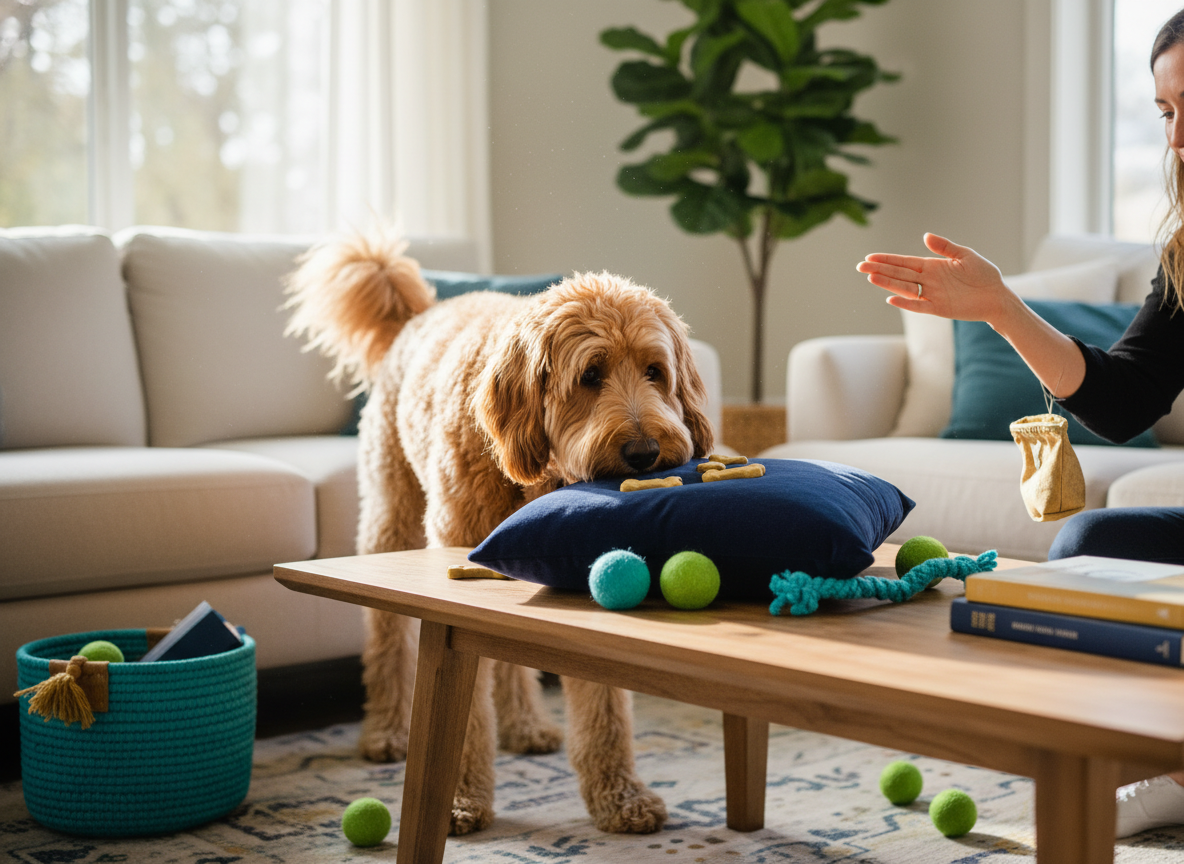
Dog sniffing for hidden treats around safe living room objects.
Elementary School 3-8 min Level 1 high supervision

Treasure Hunt

Giving your dog a calm sniffing job that burns mental energy without frantic movement.

boredomrainy dayhigh energy low chew risk meal-based
  1. Start with visible treats close by.
  2. Say a start cue such as search.
  3. Hide pieces in slightly harder spots once your dog understands.

Track: How long your dog searches calmly before asking for help.

Do not use this if: There is food guarding, multiple dogs competing, or a dog who eats unsafe objects.
Step-by-step games

Try the easy version first.

These are full enough to use from the page, with links to the deeper game notes when you want more filtering or related games.

Filter all games

Puppy-safe rules before you start

Use visible food, soft toys, and very short rounds. Stop the game when your puppy is still successful, especially if nap time is close.

Dog sniffing for hidden treats around safe living room objects.

3-8 min | Level 1

Treasure Hunt

Giving your dog a calm sniffing job that burns mental energy without frantic movement.

  1. Start with visible treats close by.
  2. Say a start cue such as search.
  3. Hide pieces in slightly harder spots once your dog understands.

Track: How long your dog searches calmly before asking for help.

Common mistake: Making the hides too hard before the dog knows the search cue.

Skip if: There is food guarding, multiple dogs competing, or a dog who eats unsafe objects.
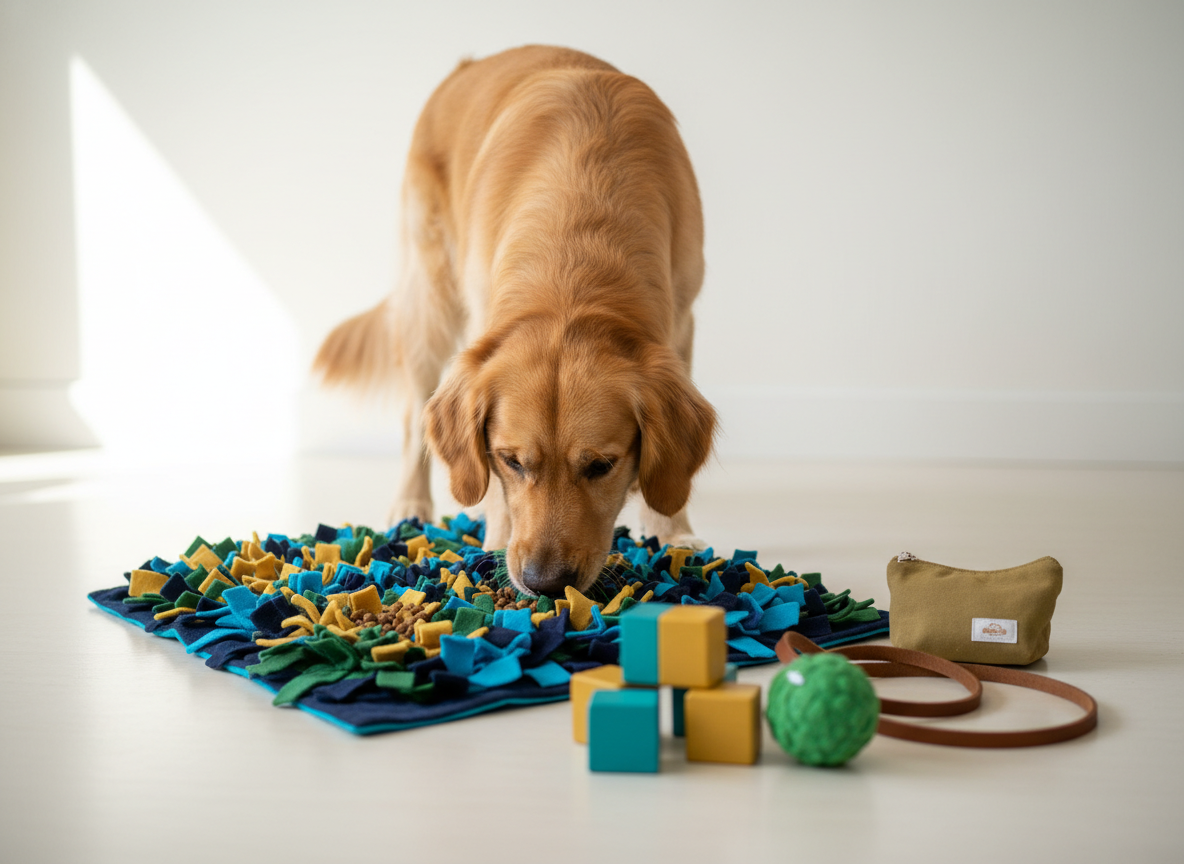
Dog calmly sniffing kibble from a snuffle mat.

3-10 min | Level 1

Snuffle Scatter

Replacing bowl feeding with a slower nose-work routine.

  1. Scatter a small meal portion in a safe mat or grass patch.
  2. Use a start cue such as search.
  3. Pick up the mat when the food is gone.

Track: Minutes of relaxed sniffing without frantic digging.

Common mistake: Leaving the mat down for a chewer to destroy.

Skip if: Your dog eats fabric, guards food, or shares the area with another dog.

Indoor puppy brain games

These games fit rainy days, apartment breaks, and pre-nap routines because they ask for sniffing or focus instead of speed.

Dog touching a trainer's hand target in a bright living room.

2-4 min | Level 1

Target Train

Teaching your dog to touch a target so later skills feel like puzzles, not pressure.

  1. Present an open palm or small target.
  2. Mark any nose movement toward it.
  3. Reward close to the target, then reset.

Track: Number of voluntary nose touches in one short session.

Common mistake: Moving the target toward the dog instead of letting the dog choose to engage.

Skip if: Your dog is worried by hands near their face or has handling-related bite history.

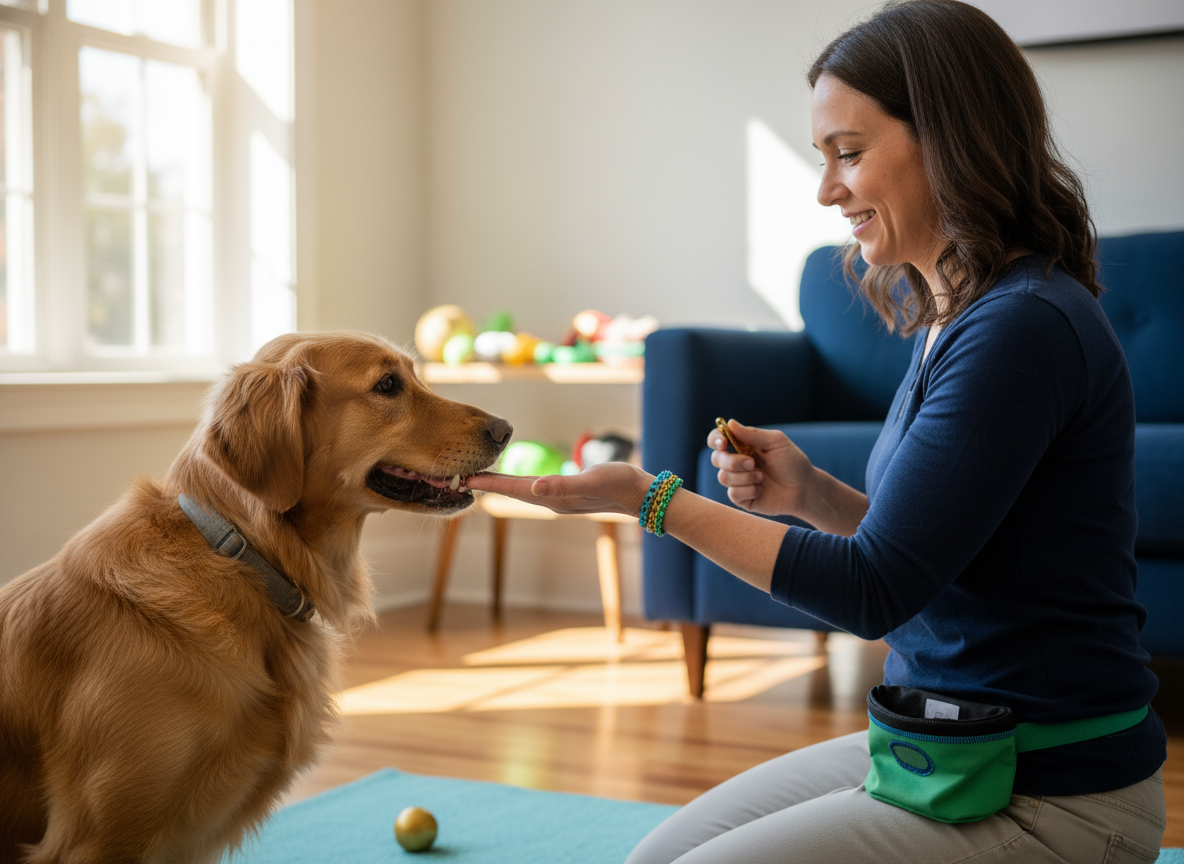
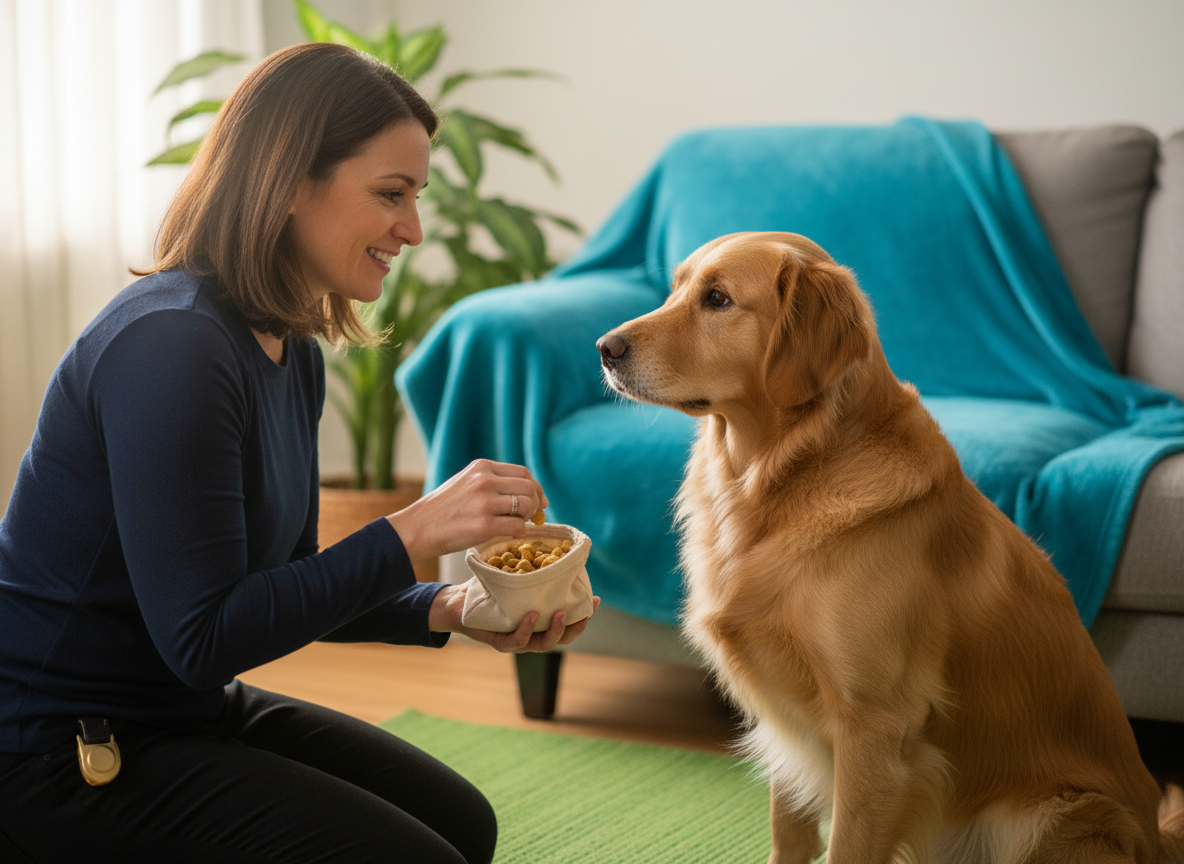
Dog calmly making eye contact with an owner holding treats.

1-3 min | Level 1

Eye Contact Game

Building the habit of checking in with you before distractions take over.

  1. Hold a treat near your chest.
  2. Mark the instant your dog looks at your face.
  3. Reward, pause, and let them offer it again.

Track: How quickly your dog offers eye contact without a repeated cue.

Common mistake: Staring at the dog intensely enough that the game feels uncomfortable.

Skip if: Direct eye contact makes your dog freeze, growl, or repeatedly look away.

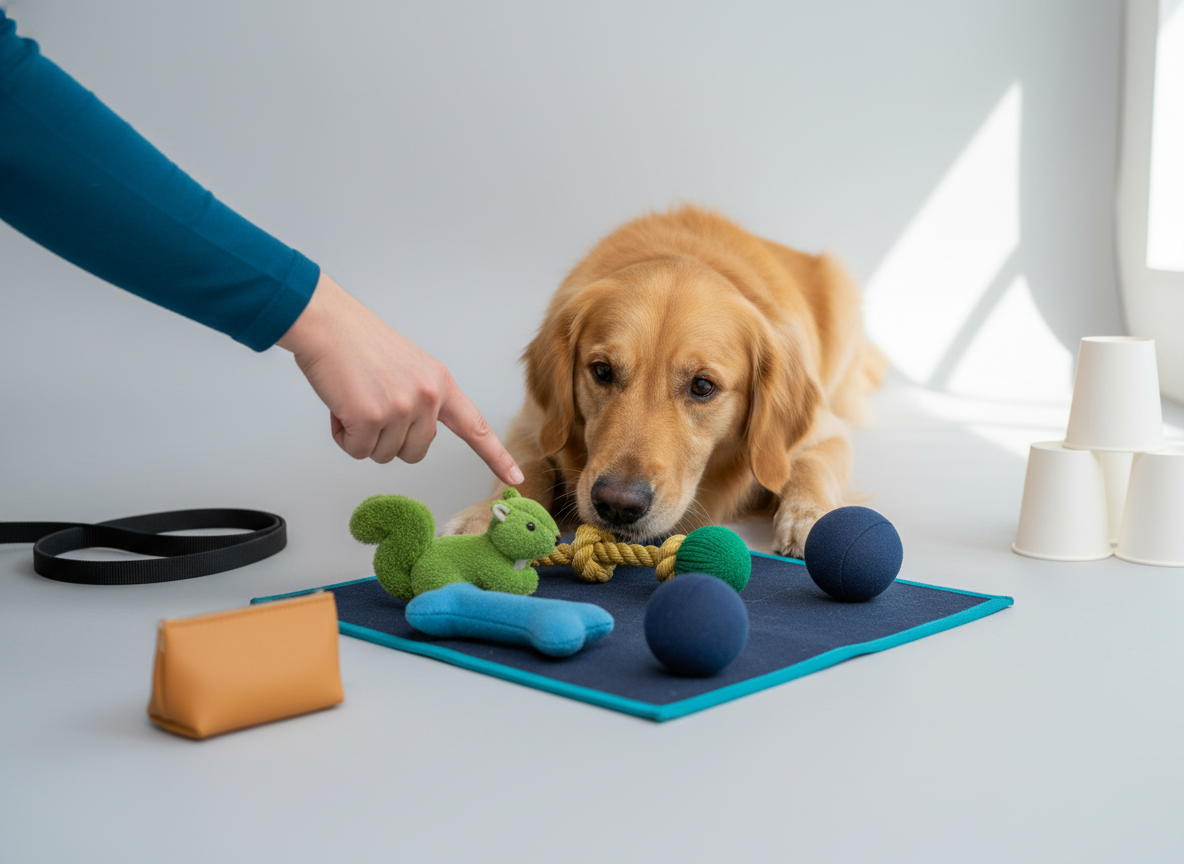
Dog choosing a named toy from a small group of toys.

4-8 min | Level 4

Name Recognition

Teaching your dog to discriminate between named objects.

  1. Start with one toy name.
  2. Reward touching or picking that toy.
  3. Add a second toy only after the first is reliable.

Track: Correct picks out of five easy repetitions.

Common mistake: Adding too many toy names before your dog understands one.

Skip if: Your dog guards toys or becomes possessive during pick-up games.

Simple choice games for puppies

Use these when you want your puppy to practice choosing a toy, finding you, or checking in without pressure.

Puppy redirecting from hands to a soft toy during play.

1-3 min | Level 1

Puppy Toy Trade

Redirecting teeth to an allowed object before play gets frantic.

  1. Keep a soft toy within reach.
  2. Move the toy before teeth land on skin or clothes.
  3. Trade and pause play before your puppy gets overtired.

Track: Redirects completed before skin contact.

Common mistake: Waiting until the puppy is fully overaroused before offering the toy.

Skip if: Bites break skin, involve growling over handling, or feel unsafe.

Dog sniffing for hidden treats around safe living room objects.

3-8 min | Level 1

Treasure Hunt

Giving your dog a calm sniffing job that burns mental energy without frantic movement.

  1. Start with visible treats close by.
  2. Say a start cue such as search.
  3. Hide pieces in slightly harder spots once your dog understands.

Track: How long your dog searches calmly before asking for help.

Common mistake: Making the hides too hard before the dog knows the search cue.

Skip if: There is food guarding, multiple dogs competing, or a dog who eats unsafe objects.
Dog touching a trainer's hand target in a bright living room.

2-4 min | Level 1

Target Train

Teaching your dog to touch a target so later skills feel like puzzles, not pressure.

  1. Present an open palm or small target.
  2. Mark any nose movement toward it.
  3. Reward close to the target, then reset.

Track: Number of voluntary nose touches in one short session.

Common mistake: Moving the target toward the dog instead of letting the dog choose to engage.

Skip if: Your dog is worried by hands near their face or has handling-related bite history.

7-day starter plan

Day 1

Use visible-treat Treasure Hunt for one minute.

Day 2

Scatter part of a meal on a safe surface.

Day 3

Reward one hand target.

Day 4

Practice Puppy Toy Trade with two low-value toys.

Day 5

Try one easy Eye Contact rep before dinner.

Day 6

Repeat the calmest game and end early.

Day 7

Choose one puppy-safe game to keep as the daily indoor default.

Free resource

Get the 10 zero-cost indoor dog games guide

A printable starter list for calm sniffing, focus, and low-equipment enrichment.

  • Low-equipment games.
  • Food and chewing safety notes.
  • Links to full game steps.

The resource link appears after signup and is emailed to you.

Related next steps

Questions owners ask

What are the best brain games for puppies?

Start with visible-treat Treasure Hunt, Snuffle Scatter, Target Train, Eye Contact, Name Recognition, and gentle Puppy Toy Trade. Keep sessions short enough that your puppy can still choose calmly.

How long should puppy brain games last?

One to three minutes is enough for many puppies. End while your puppy is still successful, especially before normal nap times.

Can brain games help with puppy biting?

They can reduce boredom and give your puppy a calmer job, but biting also needs sleep, toy placement, and predictable play endings. Hard biting or guarding signals need hands-on help.

Do puppies need puzzle toys?

No. Use safe food scatters, visible hides, hand targets, and toy trades first. Buy puzzle toys only if your puppy does not chew or swallow pieces.

Next step

Review the puppy brain-game path

If this low-risk game fits your dog, a full game-based course may make the next steps easier to follow.

Best for
  • Dogs who can safely practice short games.
  • Owners who want a structured daily path.
  • Low-risk foundation skills and enrichment.
Skip if
  • resource guarding
  • puppy bites that break skin
  • puppies too tired or overstimulated to take food

Why it fits here: This page starts with Treasure Hunt, then uses the course only as a structured next step after safety boundaries are clear.

Affiliate link: this site may earn a commission at no extra cost to you.

Skip this offer if there is bite history, severe fear, sudden behavior change, or you cannot safely control your dog.