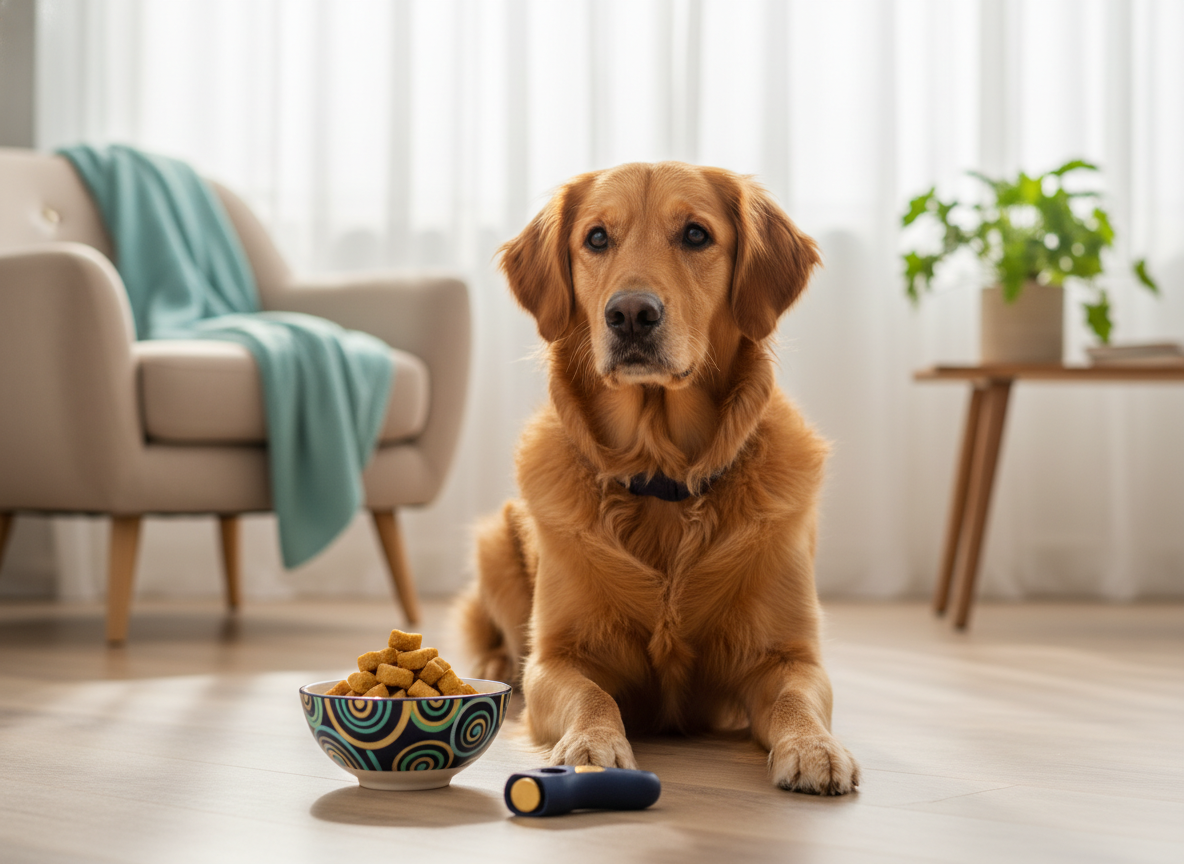
indoor dog games

Indoor Dog Games: 10 Games to Play With Your Dog Inside

Low-equipment indoor dog games and inside activities for rainy days, puppies, apartments, mental stimulation, sniffing, calm focus, and short training breaks.

Free · no account · no special equipment

Make a plan with what you have.

Choose a few details. Get up to three suitable games, clear stopping points, and a gentle seven-day plan.

First, a quick safety check

Choose any concern that applies. Sudden behavior change, pain, or illness needs veterinary advice before play.

Your dog and your space
What can you use?

Select only what you have. Uncheck kibble for food-free matches; leaving everything unchecked is allowed.

No dog name, email, or account needed. Matching runs in your browser. Privacy details

Example plan below. Medium adult dog · A quiet activity at home · indoor room · their usual kibble, an intact towel, a plain cardboard box.

Example plan — change the choices above to make yours

Your 3-game starter plan

Medium adult dog · A quiet activity at home · indoor room · their usual kibble, an intact towel, a plain cardboard box.

  • Supervise every session, with one dog and no competing children or animals. Let your dog leave at any time; a game is optional.
  • End while your dog is still comfortable. More excitement or a longer session is not the goal.
  • Use a few pieces from the usual daily food allowance. Follow your veterinarian's diet advice; skip food games if swallowing or eating safely is a concern.

Game 1 · 1–2 minutes at most

Flat towel find

Adds a small sniffing task without a tight roll, knot, or trapped reward.

Use: Their usual kibble · An intact towel

Medium-dog setup: keep props at floor level, leave one body-length of clear space, and avoid reaching over your dog. Use a quiet part of the room with a clear, non-slip floor.

  1. Lay the intact towel completely flat. Scatter three pieces of kibble on top, away from loose threads.
  2. Let your dog sniff off the visible pieces while you remain beside them.
  3. Finish before chewing begins. Remove the towel only after your dog has walked away.

Stop: Stop immediately if your dog grabs, shakes, shreds, or tries to swallow fabric. Do not pull a held towel from their mouth.

Game 2 · 1–2 minutes at most

Open box search

Offers an easy new search surface for an adult dog who leaves cardboard intact.

Use: Their usual kibble · A plain cardboard box

Medium-dog setup: keep props at floor level, leave one body-length of clear space, and avoid reaching over your dog. Use a quiet part of the room with a clear, non-slip floor.

  1. Use a stable, shallow, open box with tape, staples, handles, and loose scraps removed. It must not trap your dog's head or paws.
  2. Place three pieces of kibble in plain sight inside. Let your dog investigate without stepping in.
  3. End after the easy finds. Pick up the empty box once your dog has moved away.

Stop: Stop if your dog bites or tears cardboard, paws frantically, gets stuck, or looks worried. This is a search, not a shredding activity.

Game 3 · 1–2 minutes at most

Visible kibble search

An easy sniffing job using their usual meal, with no puzzle to chew or open.

Use: Their usual kibble

Medium-dog setup: keep props at floor level, leave one body-length of clear space, and avoid reaching over your dog. Use a quiet part of the room with a clear, non-slip floor.

  1. Put three pieces of their usual kibble in plain sight on a clean, non-slip surface.
  2. Let your dog approach and sniff at their own pace. Point once if needed; do not hold them back.
  3. Finish after one easy search. Pick up any remaining kibble once your dog has moved away.

Stop: Stop for frantic gulping, frustration, stiffening, or loss of interest. Do not take food from under your dog.

Your seven-day plan

One short round each day is enough. Repeat or rest whenever needed; progress only while your dog stays comfortable.

  1. Day 1 — Start: Flat towel find

    Try one easy round (1–2 minutes at most). Note whether your dog chooses to join and can stop comfortably.

  2. Day 2 — Repeat: Flat towel find

    Repeat the same easy setup once. Do not make it harder just because yesterday went well.

  3. Day 3 — Try: Open box search

    Try one easy round (1–2 minutes at most) if your dog is relaxed. Skip the session if they prefer rest.

  4. Day 4 — Try: Visible kibble search

    Try one easy round (1–2 minutes at most), using only its listed materials.

  5. Day 5 — Choose the easiest game

    Repeat the game your dog approached most willingly and finished most comfortably. One short round is enough.

  6. Day 6 — One small change, only if ready

    Only after two relaxed sessions of Flat towel find: Place one piece just beside a loose, flat edge. Keep it visible; never roll, knot, or wrap the towel around food. Otherwise repeat the original version or rest.

  7. Day 7 — Repeat and compare

    Return to the easiest version. Note willingness to join, comfortable stopping, and any stress signs. Repeat what suits your dog next week; this plan does not diagnose or treat behavior problems.

Inside activity list

Ten indoor dog games for rainy days, apartments, and puppies.

The goal is not to turn the room into a race track. Use sniffing, simple focus, and controlled puzzles so your dog has something useful to do inside.

Open game steps
Game Best for Time Use Safety line
Snuffle Scatter rainy day, meal enrichment, calming sniffing 3-10 min kibble, snuffle mat or grass Your dog eats fabric, guards food, or shares the area with another dog.
Treasure Hunt boredom, rainy day, high energy 3-8 min treats or kibble There is food guarding, multiple dogs competing, or a dog who eats unsafe objects.
Eye Contact Game attention, bonding, basic obedience 1-3 min treats Direct eye contact makes your dog freeze, growl, or repeatedly look away.
Muffin Game meal enrichment, problem solving, boredom 3-6 min muffin tin, tennis balls, kibble Your dog chews and swallows balls, metal tins, or other puzzle pieces.
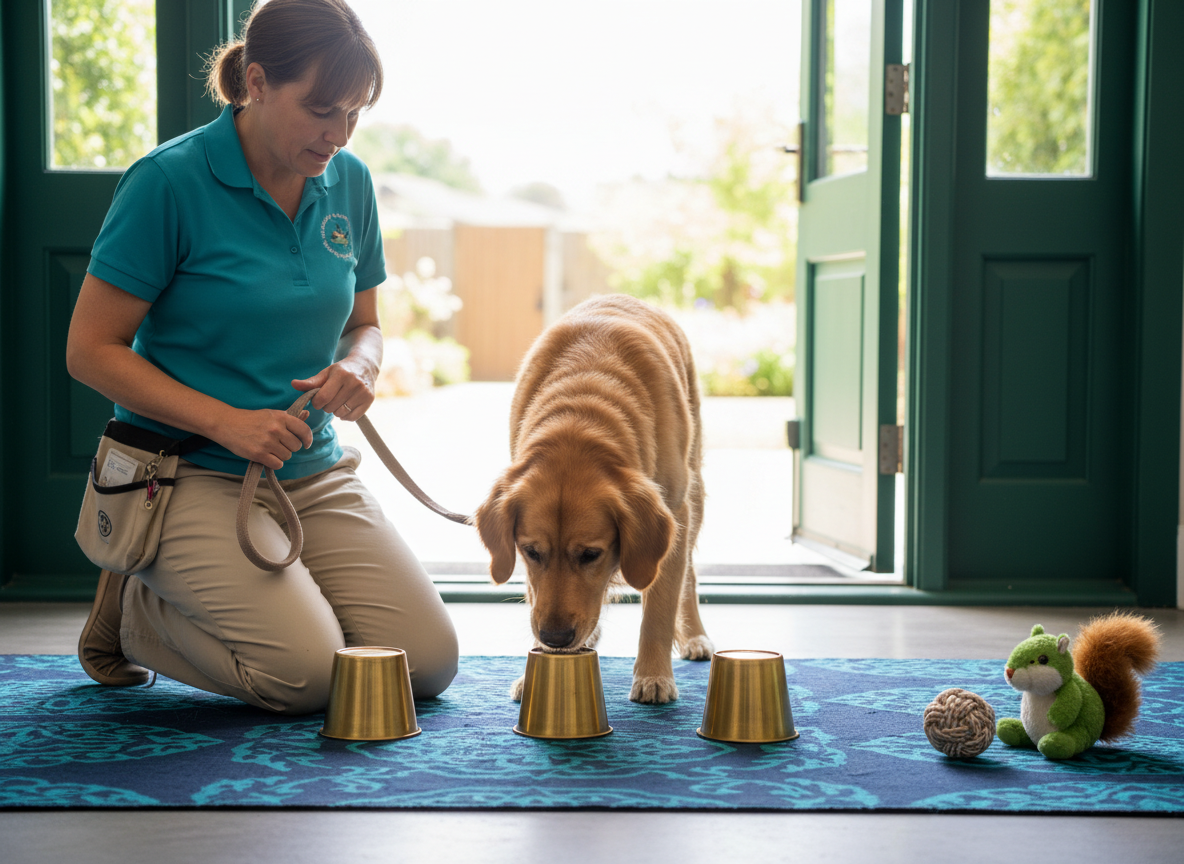
Shell Game attention, scent discrimination, quiet indoor play 3-5 min three cups, treats Your dog bites cups, guards food, or becomes frustrated by delayed access.
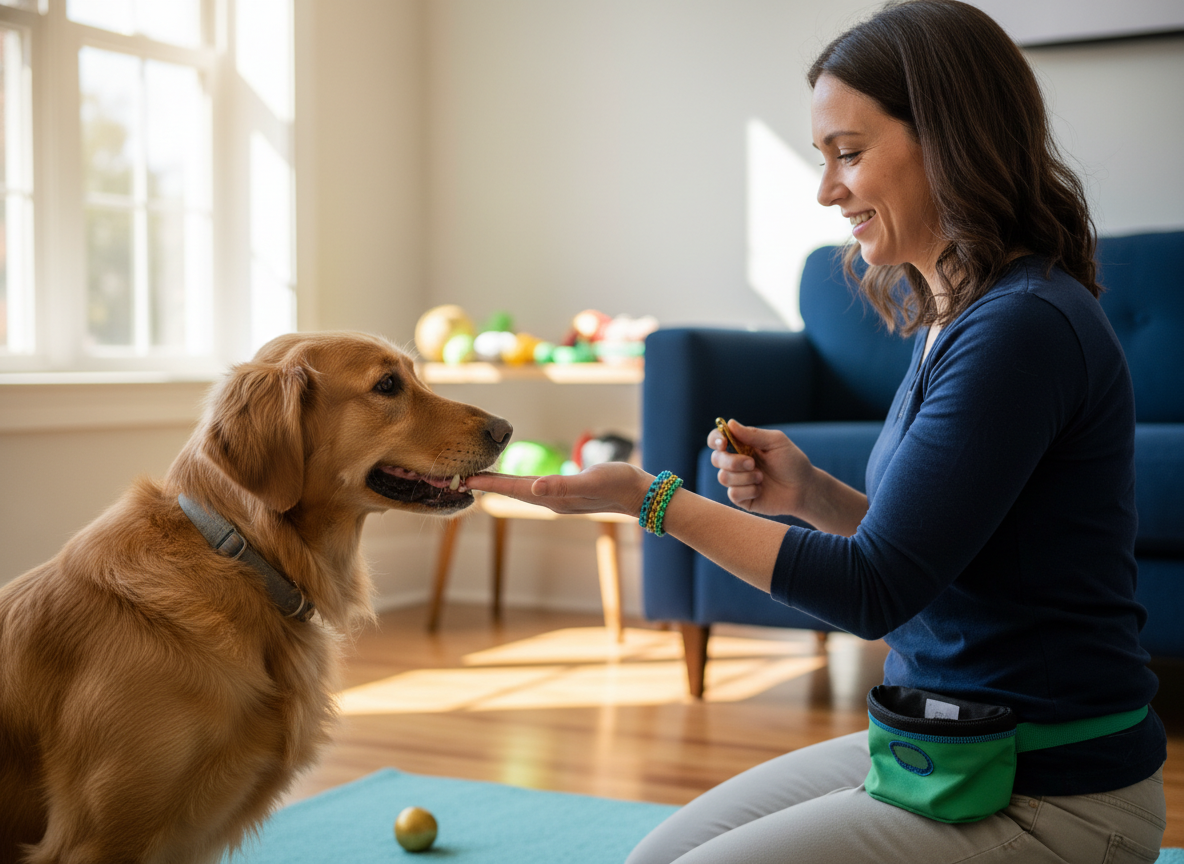
Target Train basic focus, confidence, new skill building 2-4 min treats, hand target or lid Your dog is worried by hands near their face or has handling-related bite history.
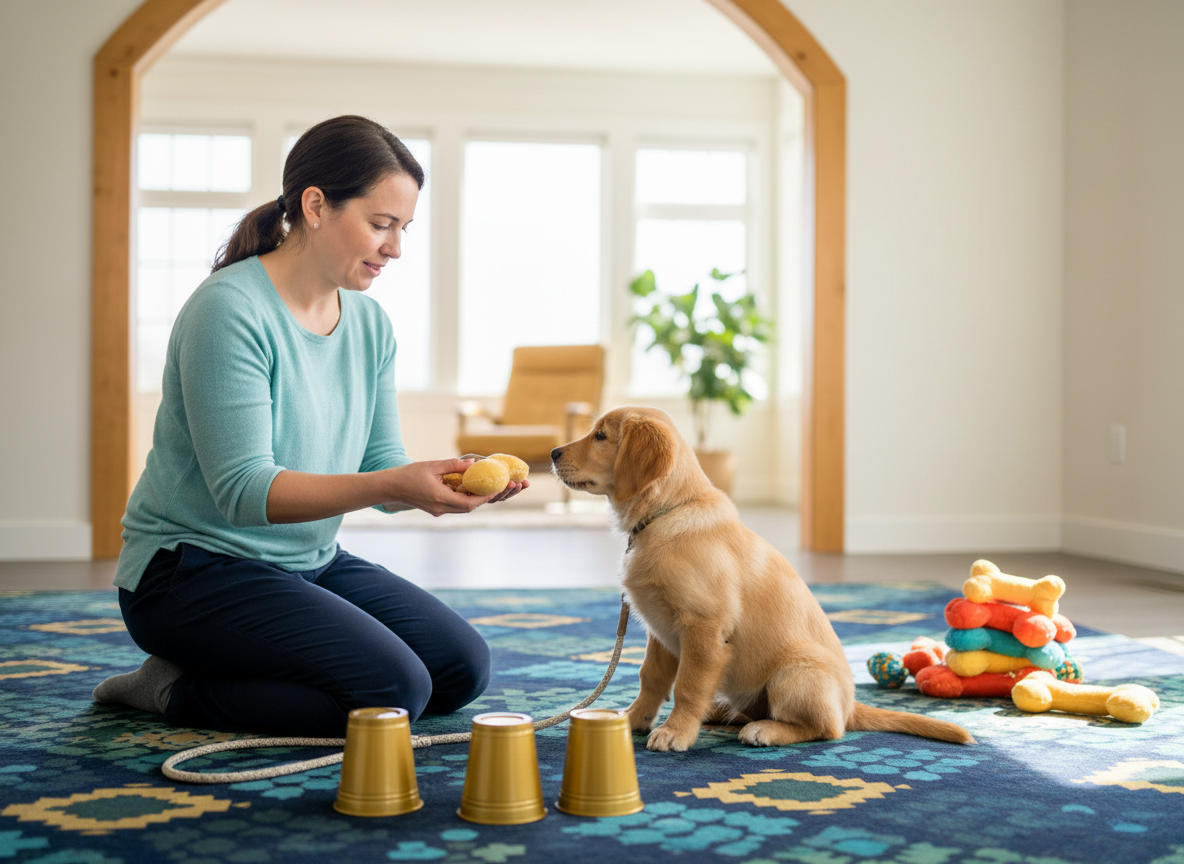
Puppy Toy Trade puppy biting, clothing bites, toy interest 1-3 min two toys, treats Bites break skin, involve growling over handling, or feel unsafe.
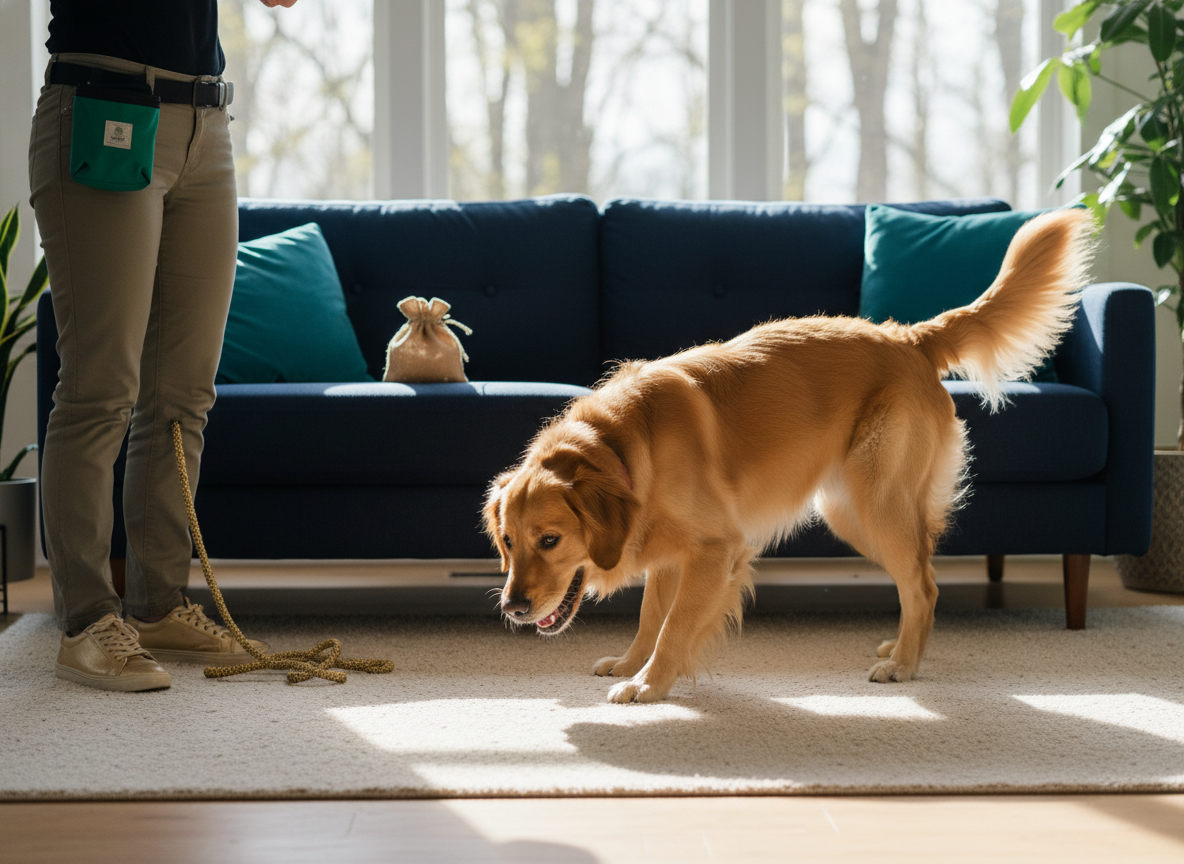
Hide and Seek recall, bonding, finding a familiar person 3-8 min treats or toy Your dog panics when separated or has unsafe recall outdoors.
Treat Countdown good choices, house manners, attention barking all day daily treat allowance Food management is medically restricted or multiple dogs compete for treats.
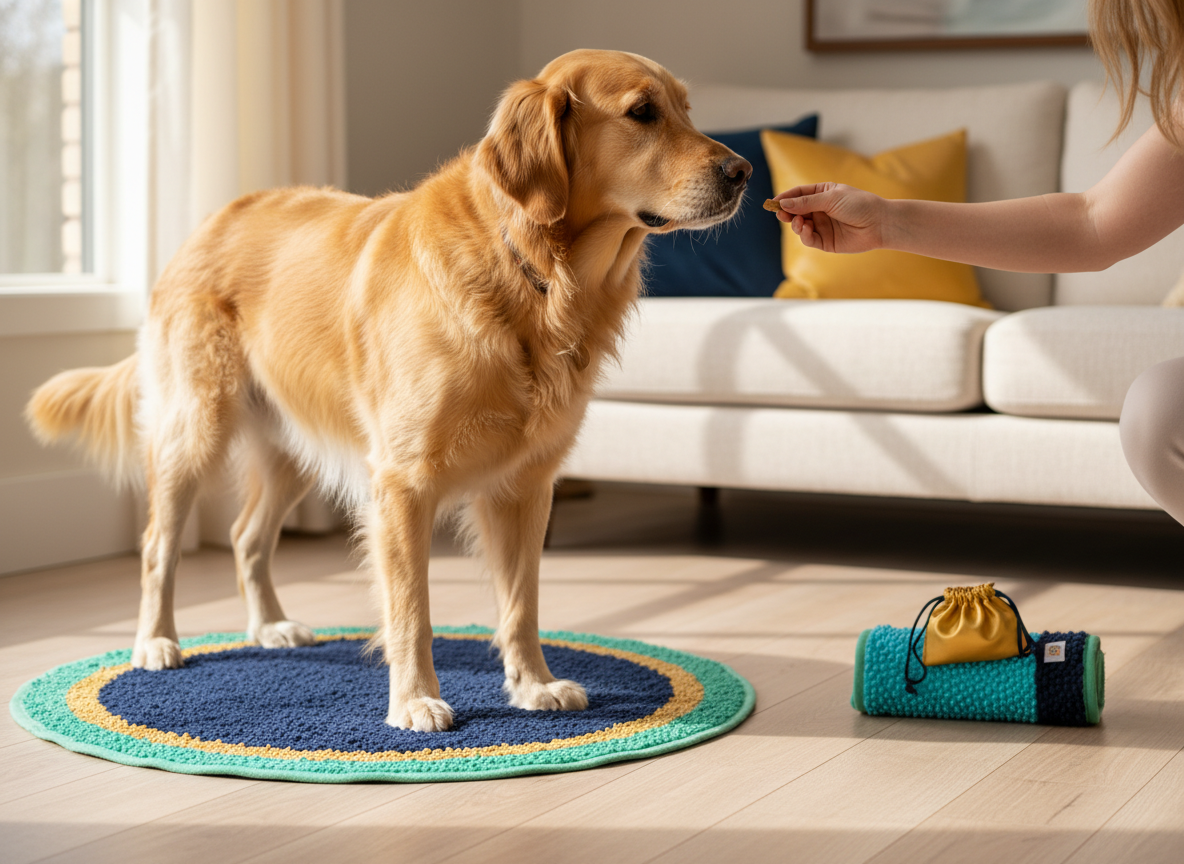
Magic Carpet mat work, calm station, settling 3-6 min mat or towel, treats Your dog guards beds, mats, or resting spaces.

Keep the first round manageable

  • Do not turn a small room into a chase track.
  • Do not use fragile household items as puzzle props.
  • Do not keep practicing after your dog gets frustrated.
  • Do not leave food puzzles or fabric mats down for dogs who chew.

Choose by the kind of activity

Rainy-day games for calm sniffing

These are the first games to try when the weather is bad or the dog is pacing indoors.

Small-space games without frantic chasing

Use these in apartments, living rooms, or short work breaks when you need useful activity without speed.

Games to play with a puppy indoors

Keep puppy sessions short. End before the puppy gets overtired, mouthy, or unable to take food calmly.

Step-by-step games

Try the easy version first.

Follow the easy steps here, or open the full game page for more notes.

Browse all game instructions
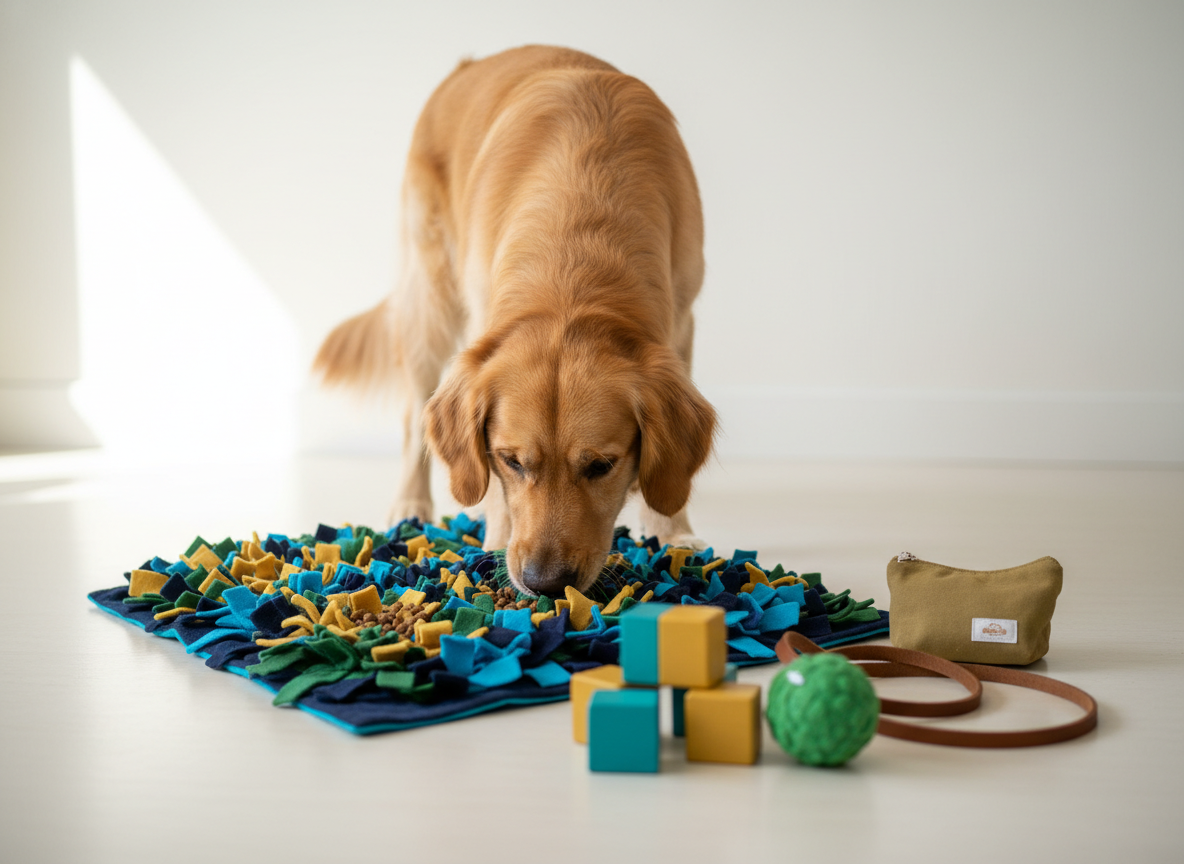
Dog calmly sniffing kibble from a snuffle mat.

3-10 min | Level 1

Snuffle Scatter

Replacing bowl feeding with a slower nose-work routine.

  1. Scatter a small meal portion in a safe mat or grass patch.
  2. Use a start cue such as search.
  3. Pick up the mat when the food is gone.

Track: Minutes of relaxed sniffing without frantic digging.

Common mistake: Leaving the mat down for a chewer to destroy.

Skip if: Your dog eats fabric, guards food, or shares the area with another dog.

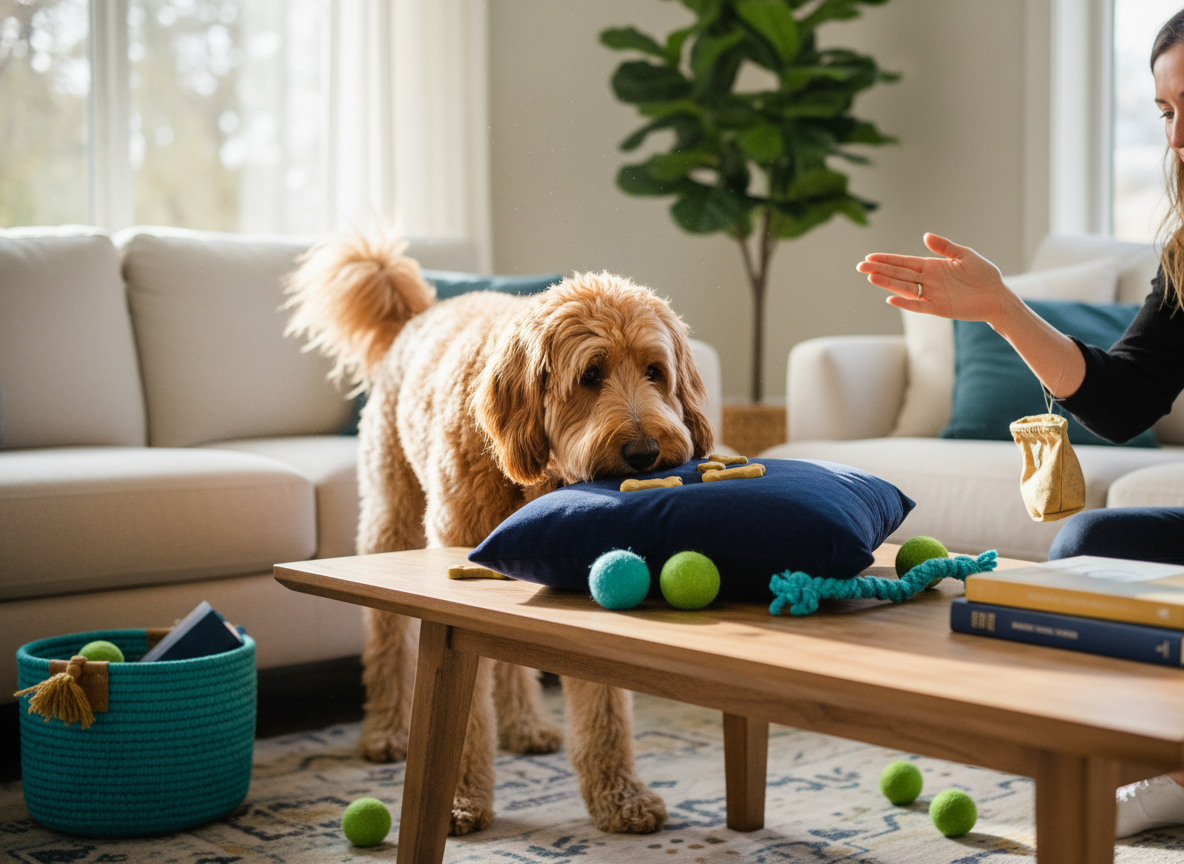
Dog sniffing for hidden treats around safe living room objects.

3-8 min | Level 1

Treasure Hunt

Giving your dog a calm sniffing job that burns mental energy without frantic movement.

  1. Start with visible treats close by.
  2. Say a start cue such as search.
  3. Hide pieces in slightly harder spots once your dog understands.

Track: How long your dog searches calmly before asking for help.

Common mistake: Making the hides too hard before the dog knows the search cue.

Skip if: There is food guarding, multiple dogs competing, or a dog who eats unsafe objects.

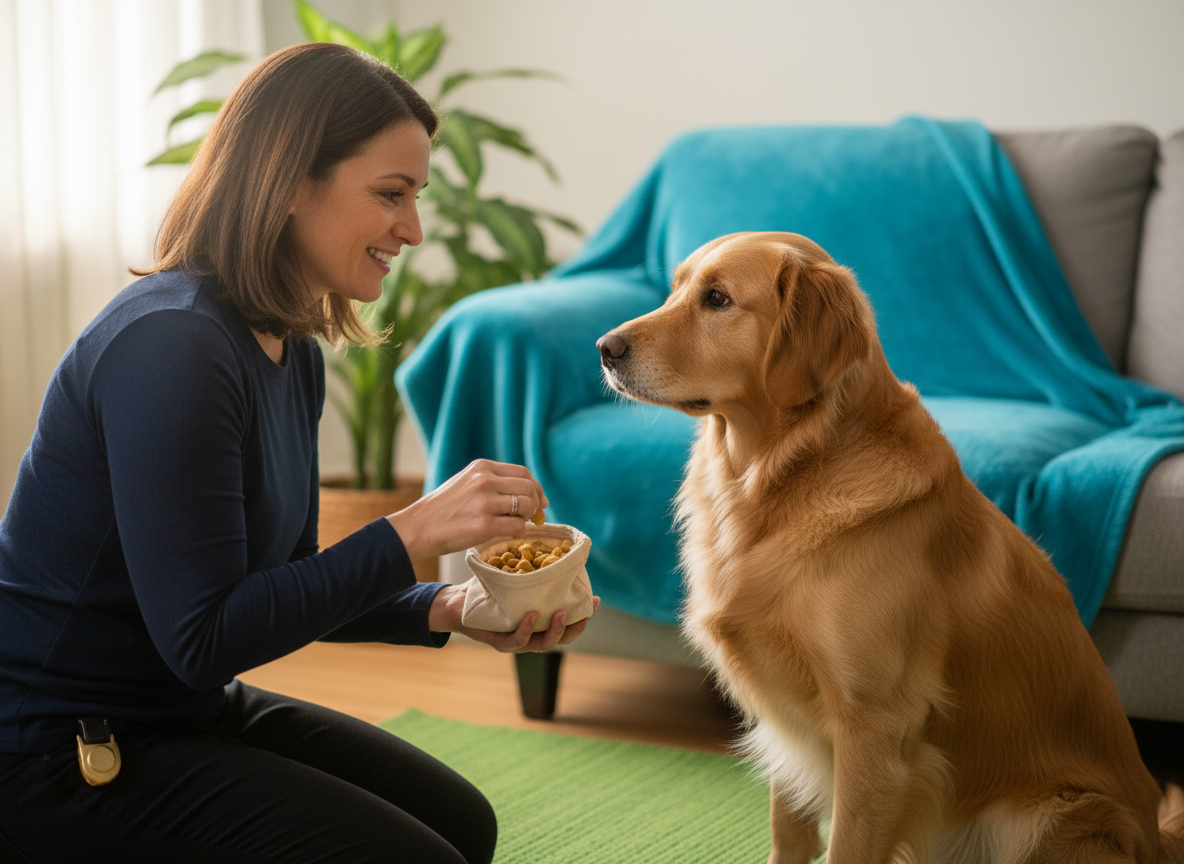
Dog calmly making eye contact with an owner holding treats.

1-3 min | Level 1

Eye Contact Game

Building the habit of checking in with you before distractions take over.

  1. Hold a treat near your chest.
  2. Mark the instant your dog looks at your face.
  3. Reward, pause, and let them offer it again.

Track: How quickly your dog offers eye contact without a repeated cue.

Common mistake: Staring at the dog intensely enough that the game feels uncomfortable.

Skip if: Direct eye contact makes your dog freeze, growl, or repeatedly look away.

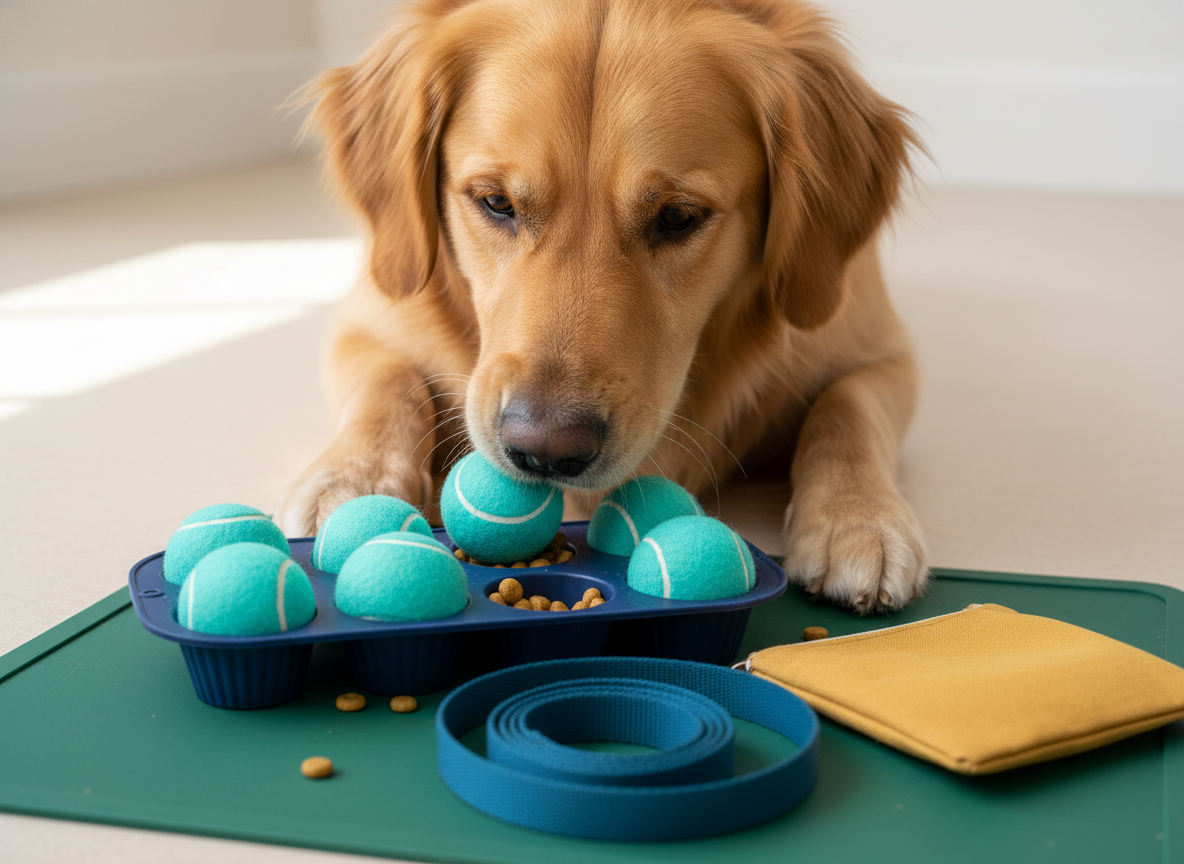
Dog solving a muffin tin puzzle with tennis balls and kibble.

3-6 min | Level 1

Muffin Game

Turning food into a small puzzle so your dog works slowly and thinks.

  1. Place kibble in a few muffin cups.
  2. Cover some cups with balls.
  3. Let your dog move the balls to find the food.

Track: How many cups your dog solves without frustration.

Common mistake: Leaving the tin down after food is gone, which invites chewing.

Skip if: Your dog chews and swallows balls, metal tins, or other puzzle pieces.

Dog choosing between three cups in a shell game.

3-5 min | Level 2

Shell Game

Encouraging your dog to use nose and focus rather than random pawing.

  1. Place a treat under one cup while your dog watches.
  2. Shuffle slowly.
  3. Reward the correct cup and reset.

Track: Correct choices at the easiest shuffle speed.

Common mistake: Shuffling too quickly and turning the game into guessing.

Skip if: Your dog bites cups, guards food, or becomes frustrated by delayed access.

Dog touching a trainer's hand target in a bright living room.

2-4 min | Level 1

Target Train

Teaching your dog to touch a target so later skills feel like puzzles, not pressure.

  1. Present an open palm or small target.
  2. Mark any nose movement toward it.
  3. Reward close to the target, then reset.

Track: Number of voluntary nose touches in one short session.

Common mistake: Moving the target toward the dog instead of letting the dog choose to engage.

Skip if: Your dog is worried by hands near their face or has handling-related bite history.

Puppy redirecting from hands to a soft toy during play.

1-3 min | Level 1

Puppy Toy Trade

Redirecting teeth to an allowed object before play gets frantic.

  1. Keep a soft toy within reach.
  2. Move the toy before teeth land on skin or clothes.
  3. Trade and pause play before your puppy gets overtired.

Track: Redirects completed before skin contact.

Common mistake: Waiting until the puppy is fully overaroused before offering the toy.

Skip if: Bites break skin, involve growling over handling, or feel unsafe.

Owner hiding behind a sofa while a dog searches happily.

3-8 min | Level 2

Hide and Seek

Making coming to you feel like a rewarding search game.

  1. Ask for a stay or have someone hold your dog.
  2. Hide in an easy spot and call once.
  3. Celebrate and reward when your dog finds you.

Track: How quickly your dog finds you after one call.

Common mistake: Hiding too well before your dog understands the game.

Skip if: Your dog panics when separated or has unsafe recall outdoors.

A small bowl of counted training treats beside a calm dog.

all day | Level 1

Treat Countdown

Helping owners notice and reward calm moments before unwanted behavior starts.

  1. Count out a small treat allowance.
  2. Reward calm or useful choices as they happen.
  3. Stop when the allowance is gone.

Track: How many rewards are spent on calm choices before evening.

Common mistake: Only noticing the dog after they bark, jump, or steal attention.

Skip if: Food management is medically restricted or multiple dogs compete for treats.

Dog standing calmly on a training mat in a home.

3-6 min | Level 2

Magic Carpet

Creating a portable place cue for calmer household moments.

  1. Place a small mat on the floor.
  2. Reward looking at or stepping onto it.
  3. Build toward four paws and a short pause.

Track: How often your dog returns to the mat voluntarily.

Common mistake: Expecting a long down-stay before the dog likes the mat.

Skip if: Your dog guards beds, mats, or resting spaces.

Free resource

Get the 10 zero-cost indoor dog games guide

A printable starter list for calm sniffing, focus, and low-equipment enrichment.

  • Low-equipment games.
  • Food and chewing safety notes.
  • Links to full game steps.
Download PDF

Free to download. No email required.

Use what fits your dog and your space.

Start with a simple activity. Buying a product is optional and does not replace supervision or a suitable setup.

ConsiderationHomemade gamesPurpose-made toysProfessional support
Starting pointFood search, hand target, or familiar toyA toy type matched to a game your dog enjoysAdvice about your dog's specific difficulty
PreparationClear a small area and check each household propCheck size, condition, cleaning, and how pieces moveDescribe the behavior, setting, and safety concerns
LimitsHousehold props can be chewed or swallowedA difficult toy can frustrate a dog; no toy suits every chewerA general game guide cannot replace an individual assessment
Choose this whenYou want to try an easy, supervised activityA repeatable or easier-to-clean setup would be usefulFear, guarding, injury, or unsafe handling changes the plan

Choose a homemade game · When a game is not the next step

Related next steps

Questions owners ask

What indoor game calms a dog fastest?

For many dogs, sniffing games are calmer than chasing games. Start with Snuffle Scatter or Treasure Hunt.

Can indoor games replace a walk?

They can help on bad days, but they do not replace every outdoor need. Use them as a backup or a short mental break.

How do I keep indoor games safe?

Use non-slip surfaces, avoid tiny objects, supervise food games, and stop before your dog starts chewing props.

What games can I play with a puppy indoors?

Start with very short games: Puppy Toy Trade, Eye Contact, Treasure Hunt with visible treats, or Snuffle Scatter with part of a meal. End before the puppy gets overtired.

What games can I play with my dog inside with no equipment?

Try Eye Contact, Target Train with your hand, Hide and Seek, Treat Countdown, or a visible-treat Treasure Hunt. Avoid fast chase games in small rooms.

What are good indoor puppy games?

Use Puppy Toy Trade, Target Train, Snuffle Scatter, and one-step Hide and Seek. Keep indoor puppy games short and pair them with naps so they do not create more biting.

Sources and scope

These are research-based activity ideas, not measured results from our own dog trials. The steps are simplified starting points and should be adjusted to what your dog can comfortably do.

Blue Cross: Enrichment for dogs and Blue Cross: How to play with your dog support the general enrichment and play principles. They have not reviewed our individual game instructions.

Read our editorial approach.