dog training games

Dog Training Games You Can Play in 5 Minutes

A practical list of dog training games with steps, supplies, timing, and safety notes for focus, recall, leash work, impulse control, and indoor enrichment.

Quick answer

Seven dog training games you can try today.

Start with one easy version. Each game below gives you the purpose, setup, first steps, and the safety line so this page answers the search before it asks you to choose a course.

Open game steps
Game Best for Time Use Safety line
Treasure Hunt boredom, rainy day, high energy 3-8 min treats or kibble There is food guarding, multiple dogs competing, or a dog who eats unsafe objects.
Up-Down Pattern overarousal, new places, threshold work 1-3 min treats Food on the ground creates guarding, scavenging risk, or unsafe leash handling.
Hide and Seek recall, bonding, alone-time confidence 3-8 min treats or toy Your dog panics when separated or has unsafe recall outdoors.
Eye Contact Game attention, bonding, basic obedience 1-3 min treats Direct eye contact makes your dog freeze, growl, or repeatedly look away.
Loose Leash Water Walk leash pulling, handler awareness, quiet walks 3-6 min leash, unbreakable cup, water You cannot safely control your dog with one hand or your dog reacts on walks.
Treat Countdown good choices, house manners, attention barking all day daily treat allowance Food management is medically restricted or multiple dogs compete for treats.
Get in the Box confidence, body awareness, independent thinking 3-5 min low box, treats, marker Your dog is worried by unstable surfaces or chews cardboard intensely.

First read

Pick one game, set up the easy version, and stop while your dog can still win.

For owners who searched for dog training games and want something specific to try today, not a vague training philosophy.

Common triggers

  • boredom after work
  • training that feels like a chore
  • overexcitement before walks
  • puppy or adult dogs who need short practice
  • owners who want games with clear steps

Avoid making it harder

What not to do first

  • Do not turn every game into speed and excitement.
  • Do not train until your dog is exhausted.
  • Do not add harder distractions before the easy version works.
  • Do not skip the easy first round just because the game looks simple.
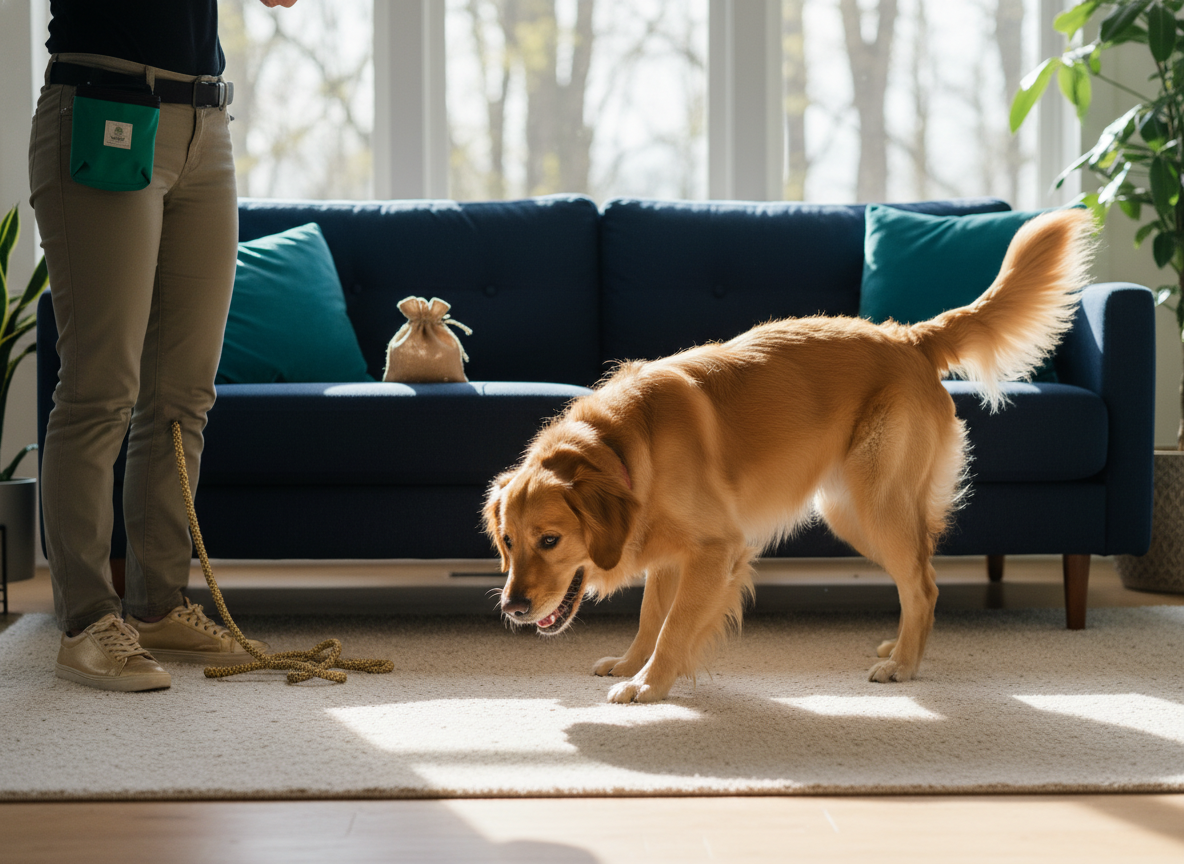
Dog sniffing for hidden treats around safe living room objects.
Elementary School 3-8 min Level 1 high supervision

Treasure Hunt

Giving your dog a calm sniffing job that burns mental energy without frantic movement.

boredomrainy dayhigh energy low chew risk meal-based
  1. Start with visible treats close by.
  2. Say a start cue such as search.
  3. Hide pieces in slightly harder spots once your dog understands.

Track: How long your dog searches calmly before asking for help.

Do not use this if: There is food guarding, multiple dogs competing, or a dog who eats unsafe objects.
Step-by-step games

Try the easy version first.

These are full enough to use from the page, with links to the deeper game notes when you want more filtering or related games.

Filter all games

Games for training that feels like play

These choices fit owners who want learning mixed with fun. Keep the first round short enough that your dog asks for more instead of checking out.

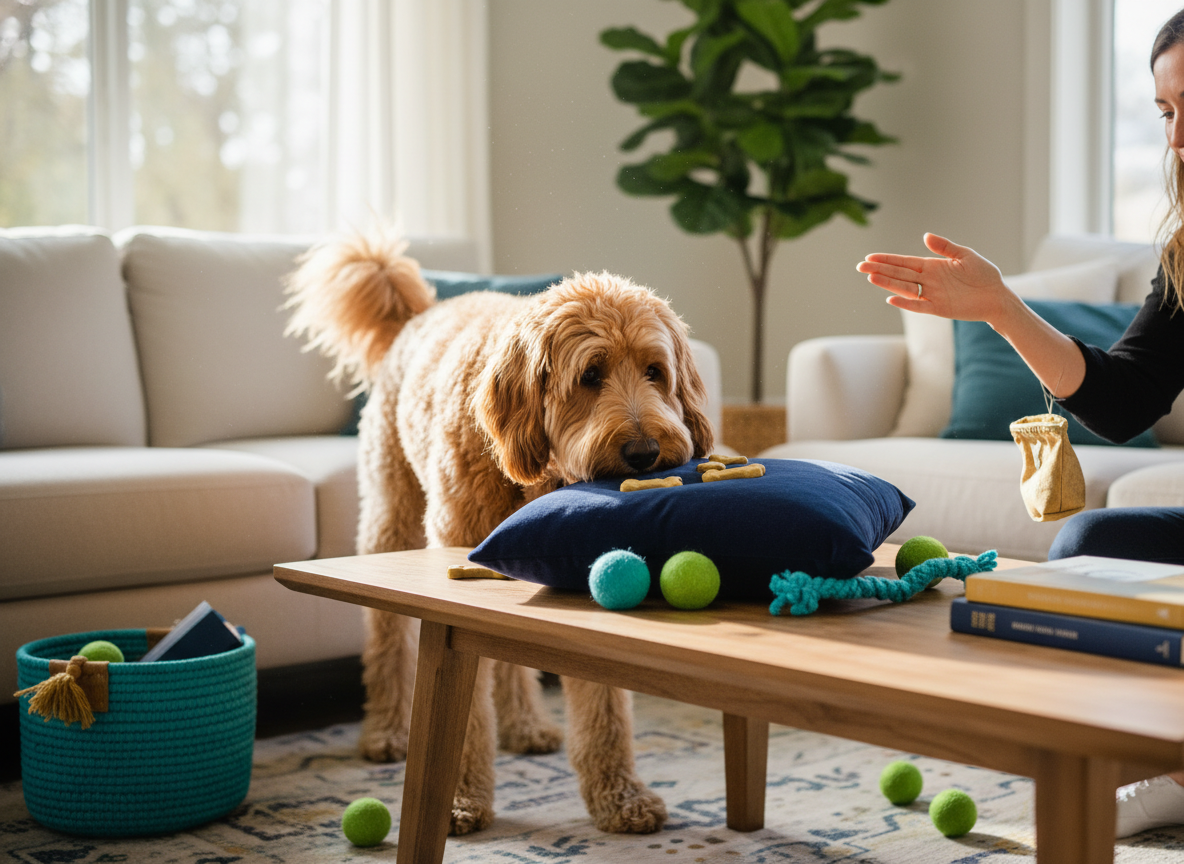
Dog sniffing for hidden treats around safe living room objects.

3-8 min | Level 1

Treasure Hunt

Giving your dog a calm sniffing job that burns mental energy without frantic movement.

  1. Start with visible treats close by.
  2. Say a start cue such as search.
  3. Hide pieces in slightly harder spots once your dog understands.

Track: How long your dog searches calmly before asking for help.

Common mistake: Making the hides too hard before the dog knows the search cue.

Skip if: There is food guarding, multiple dogs competing, or a dog who eats unsafe objects.
Owner hiding behind a sofa while a dog searches happily.

3-8 min | Level 2

Hide and Seek

Making coming to you feel like a rewarding search game.

  1. Ask for a stay or have someone hold your dog.
  2. Hide in an easy spot and call once.
  3. Celebrate and reward when your dog finds you.

Track: How quickly your dog finds you after one call.

Common mistake: Hiding too well before your dog understands the game.

Skip if: Your dog panics when separated or has unsafe recall outdoors.

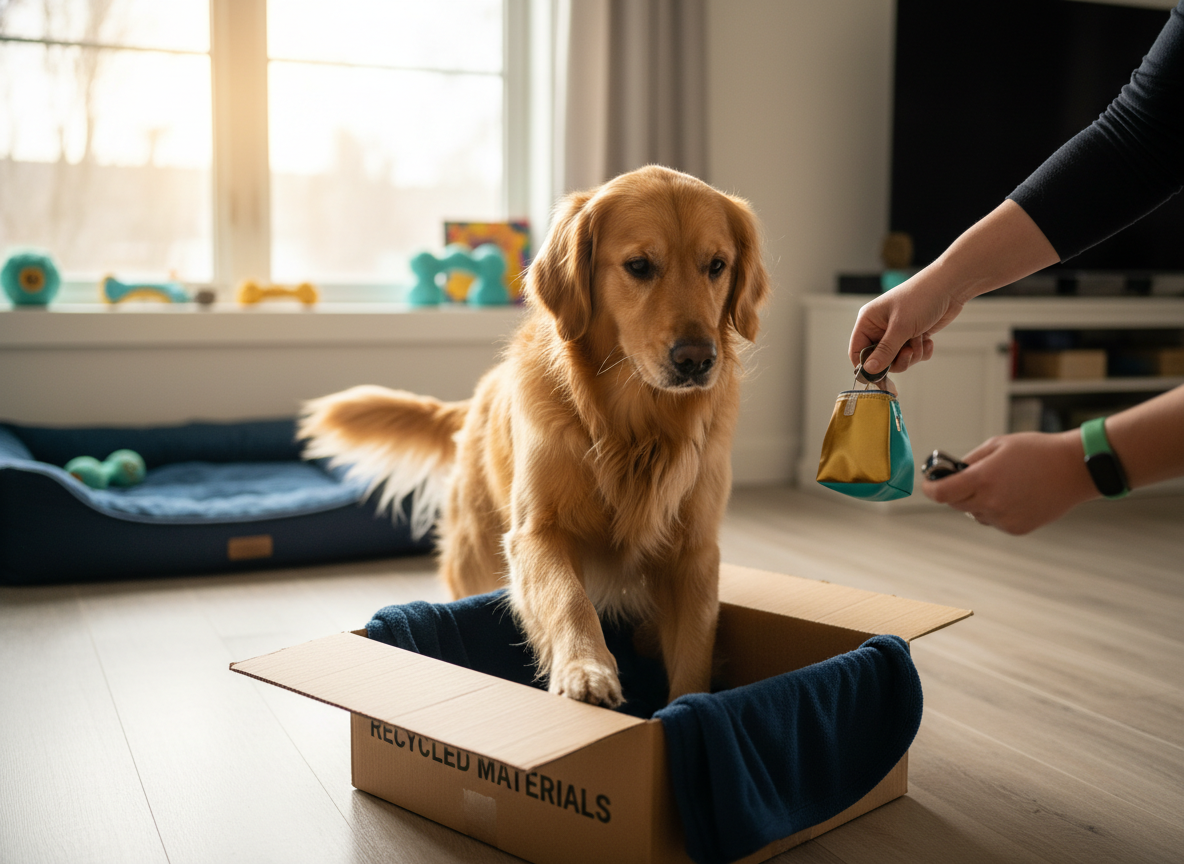
Dog stepping into a low cardboard box during shaping practice.

3-5 min | Level 2

Get in the Box

Teaching your dog to offer small choices and learn through shaping.

  1. Place a low open box on the floor.
  2. Reward looking at, sniffing, or stepping toward it.
  3. Build toward one paw, then four paws inside.

Track: Most advanced voluntary interaction with the box.

Common mistake: Putting the dog in the box instead of rewarding offered movement.

Skip if: Your dog is worried by unstable surfaces or chews cardboard intensely.

Games for focus and better manners

Use these when you want a small, repeatable skill that can later transfer into walks, visitors, meals, or calmer house routines.

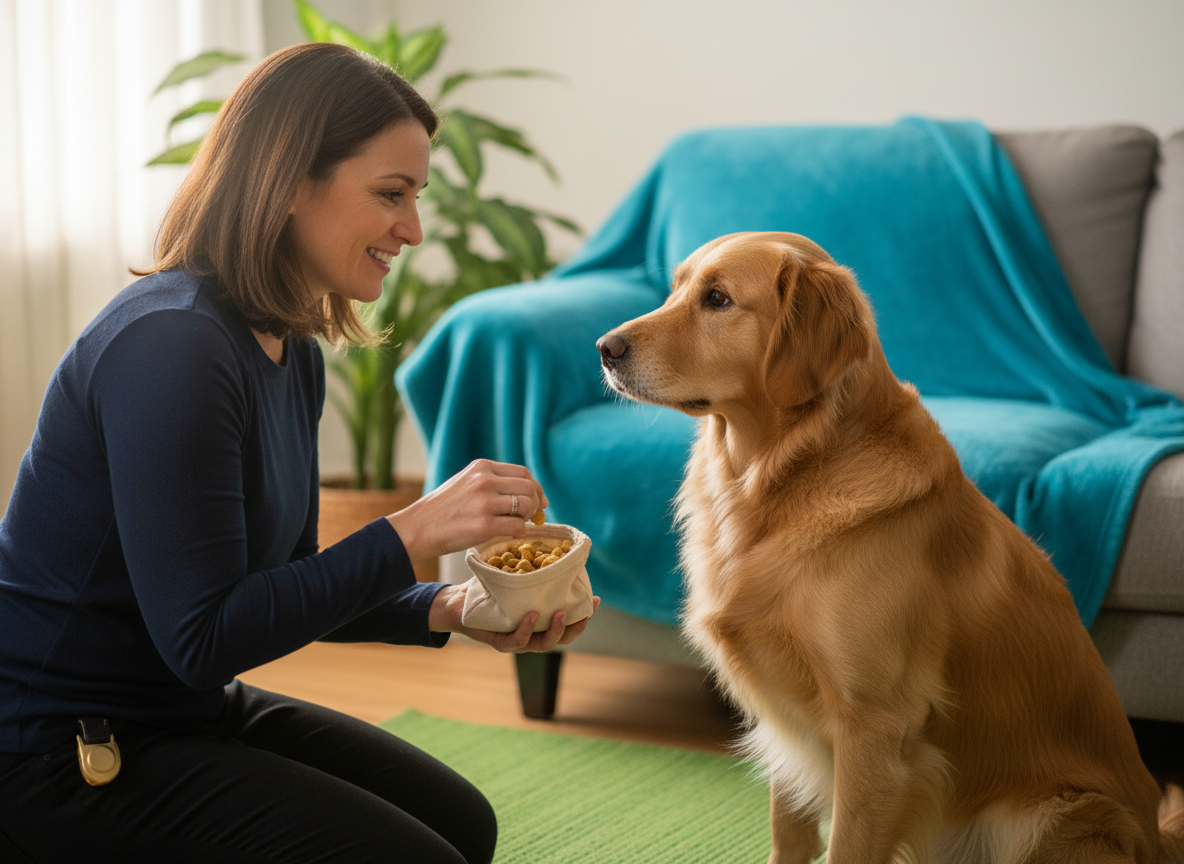
Dog calmly making eye contact with an owner holding treats.

1-3 min | Level 1

Eye Contact Game

Building the habit of checking in with you before distractions take over.

  1. Hold a treat near your chest.
  2. Mark the instant your dog looks at your face.
  3. Reward, pause, and let them offer it again.

Track: How quickly your dog offers eye contact without a repeated cue.

Common mistake: Staring at the dog intensely enough that the game feels uncomfortable.

Skip if: Direct eye contact makes your dog freeze, growl, or repeatedly look away.

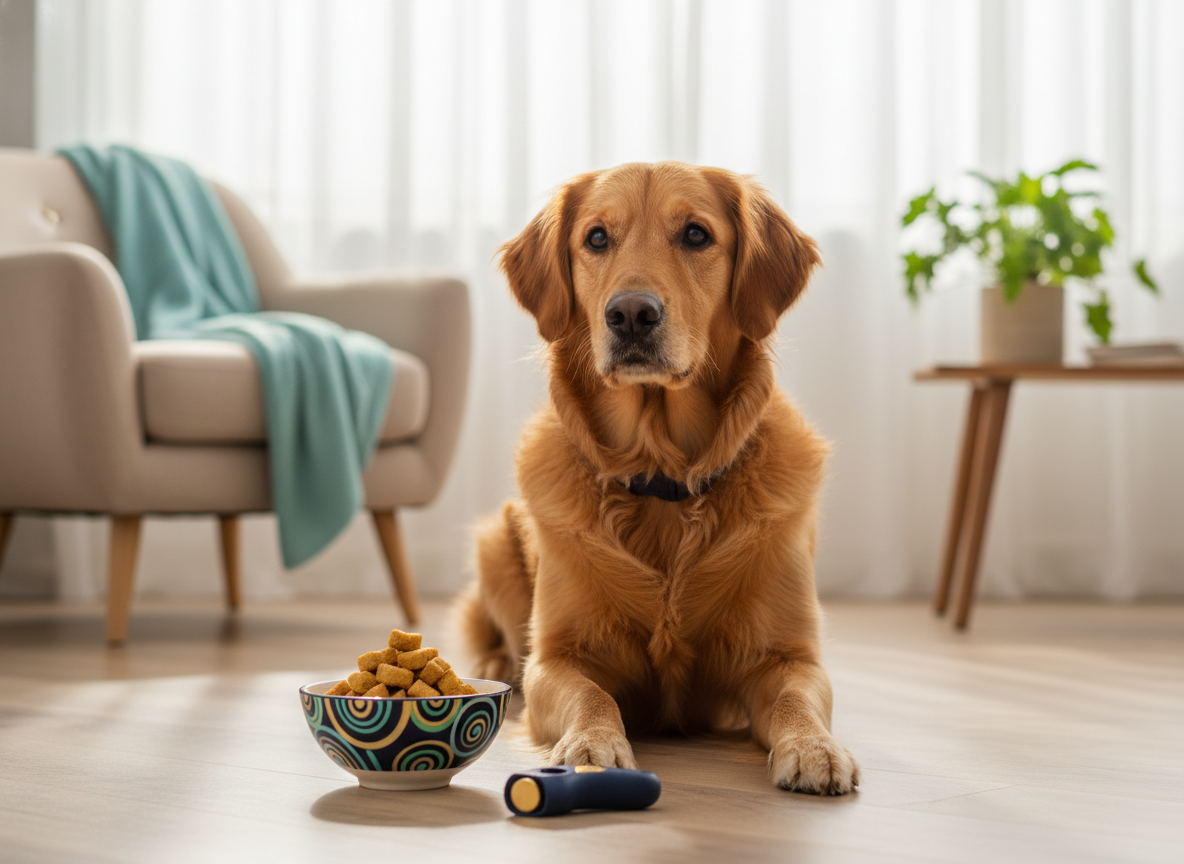
A small bowl of counted training treats beside a calm dog.

all day | Level 1

Treat Countdown

Helping owners notice and reward calm moments before unwanted behavior starts.

  1. Count out a small treat allowance.
  2. Reward calm or useful choices as they happen.
  3. Stop when the allowance is gone.

Track: How many rewards are spent on calm choices before evening.

Common mistake: Only noticing the dog after they bark, jump, or steal attention.

Skip if: Food management is medically restricted or multiple dogs compete for treats.

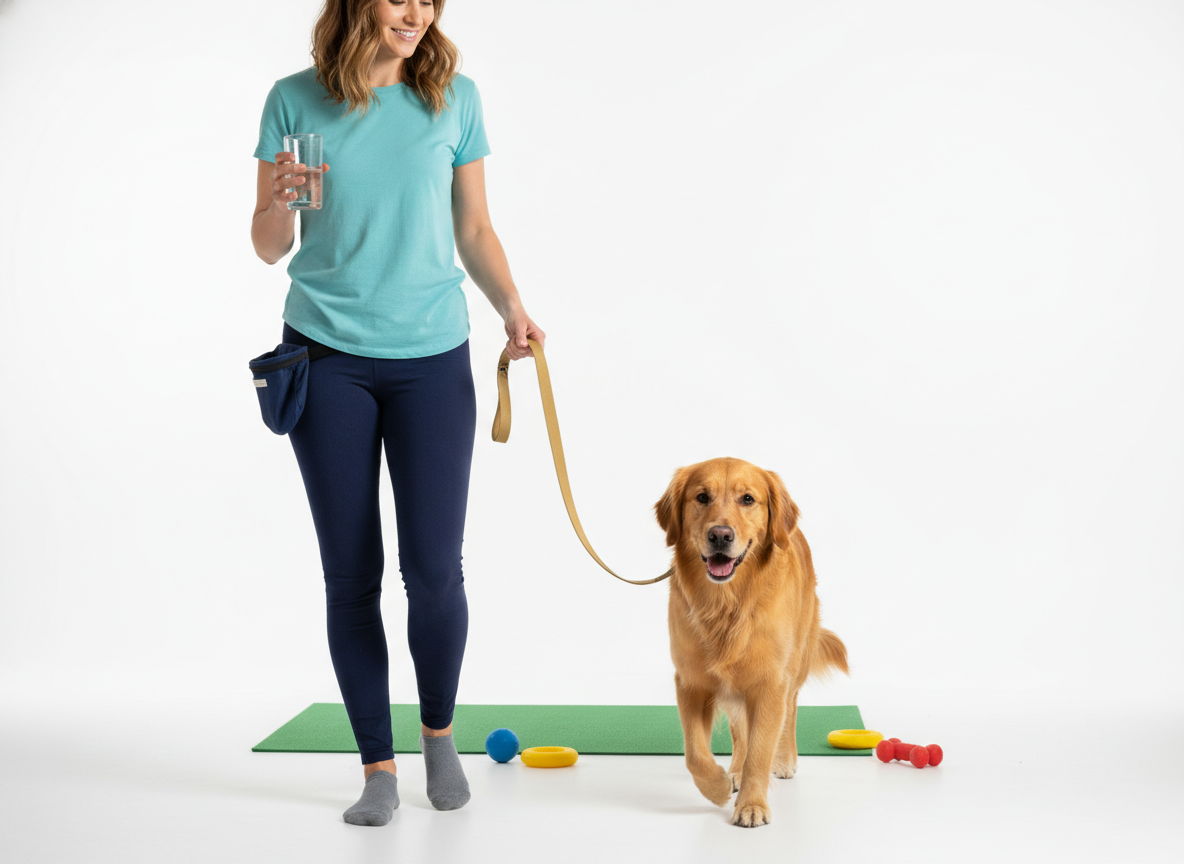
Owner practicing loose leash walking while holding a cup of water.

3-6 min | Level 3

Loose Leash Water Walk

Making loose-leash walking visible: if the leash surges, the water tells you.

  1. Hold the leash in one hand and a partly filled cup in the other.
  2. Walk only while the leash hangs loose.
  3. Reset calmly when the cup spills or leash tightens.

Track: Steps walked without spilling water or tightening the leash.

Common mistake: Trying this on a busy street before practicing in a quiet space.

Skip if: You cannot safely control your dog with one hand or your dog reacts on walks.

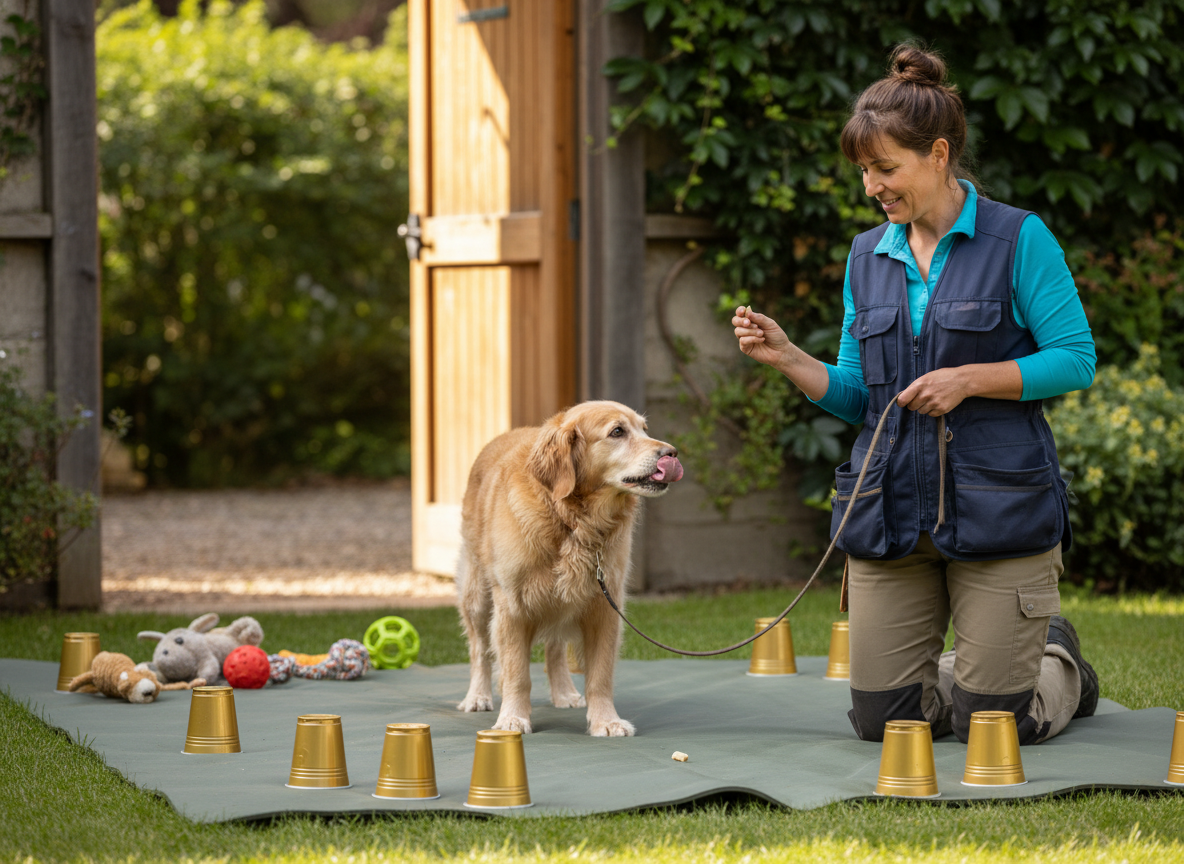
Dog eating a dropped treat and looking back up at the handler.

1-3 min | Level 2

Up-Down Pattern

Giving a dog a predictable ground-to-handler rhythm when the environment feels too big.

  1. Drop one treat at your feet.
  2. Wait for your dog to eat and look back up.
  3. Mark the look up and drop the next treat.

Track: Whether your dog can eat and reorient within two seconds.

Common mistake: Using it too close to a trigger where your dog cannot look back up.

Skip if: Food on the ground creates guarding, scavenging risk, or unsafe leash handling.

7-day starter plan

Day 1

Play Treasure Hunt with visible treats.

Day 2

Try Up-Down Pattern for one minute.

Day 3

Use Hide and Seek for one easy recall.

Day 4

Practice Loose Leash Water Walk in a quiet spot.

Day 5

Add Treat Countdown for calm choices.

Day 6

Repeat the game your dog understood fastest.

Day 7

Choose whether a full game-based plan would help you stay consistent.

Free resource

Get the 10 zero-cost indoor dog games guide

A printable starter list for calm sniffing, focus, and low-equipment enrichment.

  • Low-equipment games.
  • Food and chewing safety notes.
  • Links to full game steps.

Email delivery is ready to connect; this preview unlocks the resource and records anonymous signup intent.

Comparison matrix

Choose the next step by risk and effort.

Use the lowest-risk path that matches your dog before buying more gear or a course.

Factor Free indoor games Puzzle toys / tools Brain Training course In-person trainer
CostFreeLow to mediumPaid courseHighest
Time needed2-10 minutesSetup plus supervisionShort daily lessonsScheduled sessions
Best forBoredom, focus, low-risk practiceDogs who enjoy puzzle or leash toolsOwners who want a structured game pathBite risk, severe fear, complex cases
Not forDogs who need urgent hands-on helpDogs who swallow or guard objectsOwners who cannot practice consistentlyNot a quick content substitute
SupervisionOwner presentOwner present, especially food toysOwner-led practiceProfessional-led
Gear neededTreats, towels, household itemsPuzzle, mat, leash, treat pouchInternet access and treatsVaries by case
Next stepTry one game todayBuy only after the game style fitsReview the course after safety checkStart with vet or certified behavior help

Related next steps

Questions owners ask

What dog training game should I start with?

Start with Treasure Hunt if your dog needs calm enrichment, Up-Down Pattern if they need a reset, or Treat Countdown if you want to reward calm choices around the house.

Can games really help dog behavior?

Games can help many dogs practice focus, impulse control, recall, loose-leash habits, and calmer choices. They are not a substitute for professional help when there is bite risk or severe fear.

How long should each game last?

Start with 2 to 5 minutes. Short sessions are easier to repeat and less likely to push your dog into frustration.

What if my dog gets more excited?

Choose slower games like Treasure Hunt or Snuffle Scatter, lower the difficulty, and stop earlier. Excitement is information, not failure.

Are these dog training games online or video games?

These are online instructions for real-life dog training games you play with your dog. They are not virtual pet games or mobile games.

Can I use these as free puppy training games?

Yes, but choose the puppy-safe versions: Puppy Toy Trade, Eye Contact, Target Train, and visible-treat Treasure Hunt. Keep sessions very short.

Next step

See the full 21-game course

If this low-risk game fits your dog, a full game-based course may make the next steps easier to follow.

Best for
  • Dogs who can safely practice short games.
  • Owners who want a structured daily path.
  • Low-risk foundation skills and enrichment.
Skip if
  • bite-risk behavior
  • sudden behavior changes
  • dogs too scared or stressed to take food

Why it fits here: This page starts with Treasure Hunt, then uses the course only as a structured next step after safety boundaries are clear.

Affiliate link: this site may earn a commission at no extra cost to you.

Skip this offer if there is bite history, severe fear, sudden behavior change, or you cannot safely control your dog.